Business Model Pivot: A Practical Guide to Changing Course
What if your customers value a different outcome than the one your business was built to deliver? That mismatch may call for more than a product tweak. A business model pivot changes a core choice about your customers, offer, revenue, channels, or operations. Before you commit, test your business assumptions against what customers do, what they will pay for, and what your organization can deliver.
The challenge is knowing whether your current model needs a small adjustment or a change in direction. A pivot is not automatically a rescue plan, and one disappointing result does not prove the whole model is broken. A disciplined decision connects customer evidence to financial and operational realities, then tests whether a new configuration can work.
What makes a business model pivot different from iteration?
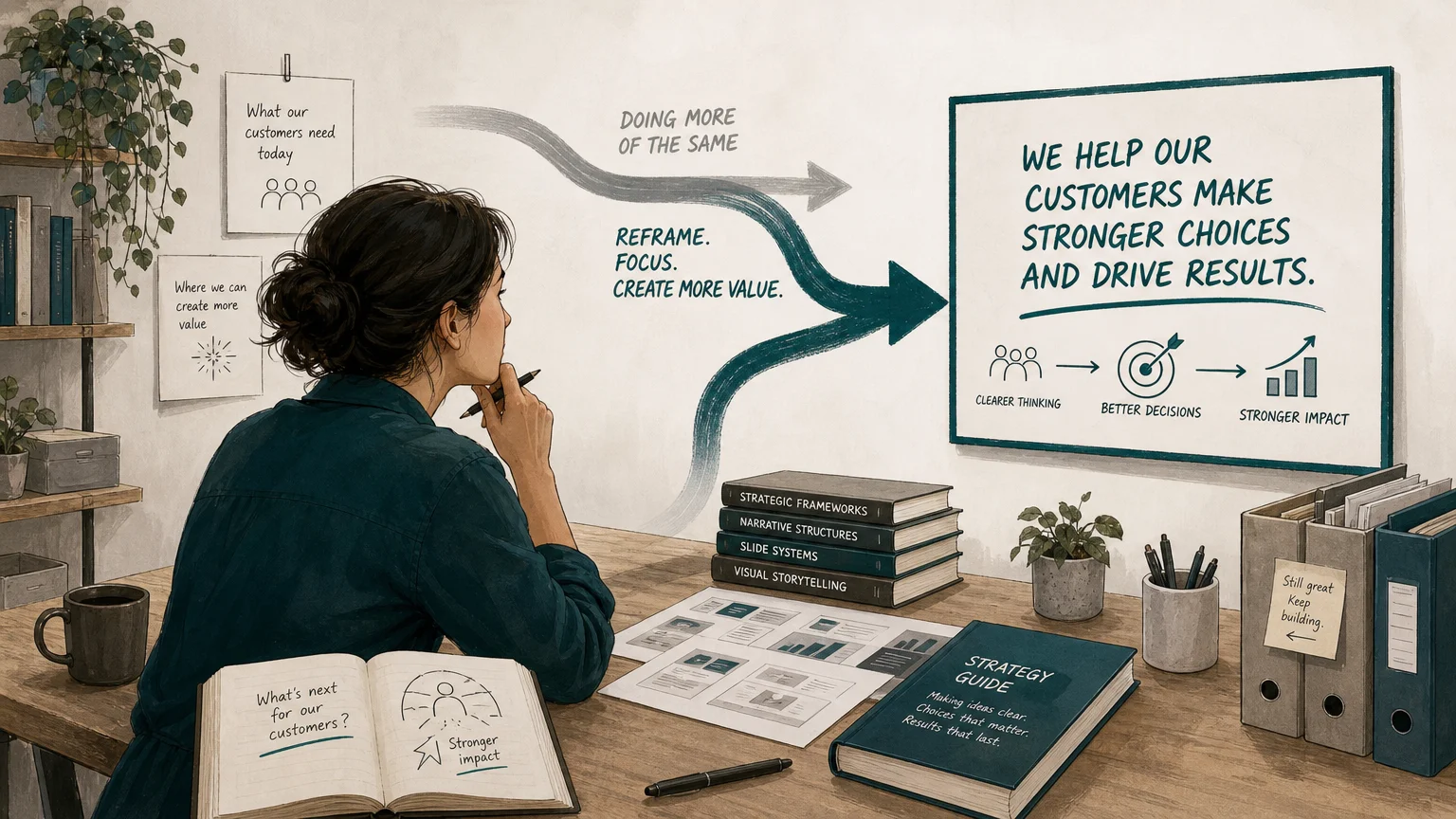
Imagine a software company that improves its onboarding flow after customers struggle to set up an existing product. That is usually an iteration: the company adjusts its approach but keeps the central customer, value proposition, and revenue logic intact.
A pivot changes a more fundamental assumption. The same company might discover that customers need the analysis the software enables more than the software itself. It could then test a different offer, customer segment, or way of generating revenue. The distinction depends on the size of the change, not how dramatic the announcement sounds.
A useful test is to ask whether the current evidence supports the business model’s core logic. If customers want the outcome but a feature or delivery method falls short, improve that part first. If repeated tests challenge who will pay, what they value, or whether the economics can work, explore a different model. A case survey of 49 software startups identified multiple pivot types and triggering factors. Its sample is limited to software startups, but it illustrates that a pivot can change different parts of a business rather than replace everything at once.
Which signals can justify a change in direction?
One weak month or a difficult customer conversation rarely settles the question. Look instead for repeated evidence across customer behavior, sales, costs, and the market. The pattern matters more than a single metric because the same disappointing result can have different causes.
Start with customer traction. Are target customers adopting the offer, returning, recommending it, or using workarounds to solve the problem? Ask whether the person who benefits is also the person who can approve or pay. Strong interest without repeat use or willingness to pay may reveal a mismatch between the value delivered and the business’s revenue logic.
Then examine the economics and delivery requirements. Acquisition costs, retention, contribution margins, delivery capacity, and cash needs help distinguish weak demand from a costly operating model. The U.S. Small Business Administration’s market research guidance highlights questions such as demand, market size, competing alternatives, and customer pricing. Use these as prompts, then validate the answers with research specific to your customers and market.
Finally, consider external shifts, including new competitors, technology, regulation, or changing customer preferences. These are reasons to investigate, not proof that a pivot is needed. Ask what has changed, which parts of the current model are affected, and whether the change is likely to persist.
How can you choose what to pivot?
When several warning signs appear, avoid treating “pivot” as a single all-or-nothing choice. Identify the assumption under pressure and the business model element connected to it. You might reconsider the customer segment, problem, value proposition, channel, revenue stream, or cost structure while preserving capabilities that still create value.
For example, a company might find that its chosen customer segment has limited demand, while a neighboring group faces the same problem more urgently. It could test that new segment with a focused offer before changing its whole product or organization. Alternatively, customers may value the solution but resist its current pricing or delivery format. In that case, test a different revenue or channel hypothesis before abandoning the offer.
Write down the current assumption, the evidence that challenges it, and the alternative you intend to test. Then state what result would support continuing, what would prompt another adjustment, and what would make you stop. Our business model prototyping resource can help you make alternative models easier to compare before committing resources.
How do you test a pivot before scaling it?
A promising idea is not yet a validated model. Design the smallest experiment that can test the riskiest assumption, and choose a measure that reflects real behavior rather than stated enthusiasm.
- Name the uncertainty. Specify what must be true about the customer, problem, offer, price, or delivery.
- Choose a direct test. Use interviews to understand behavior, a pilot to observe use, or a limited offer to test willingness to pay.
- Set decision criteria. Define the signal, period, and threshold that will guide your next decision.
- Compare the economics. Include acquisition, delivery, staffing, and transition costs, not just potential revenue.
- Review and adapt. Keep, revise, or reject the hypothesis based on what the test reveals.
Keep tests appropriately small, but not so narrow that they avoid the important question. A survey can reveal how customers describe a problem, for instance, but a paid pilot may better test whether they will spend money to solve it. Where a test produces mixed signals, learn which part of the model is uncertain before expanding the experiment.
What should you evaluate before scaling the new model?
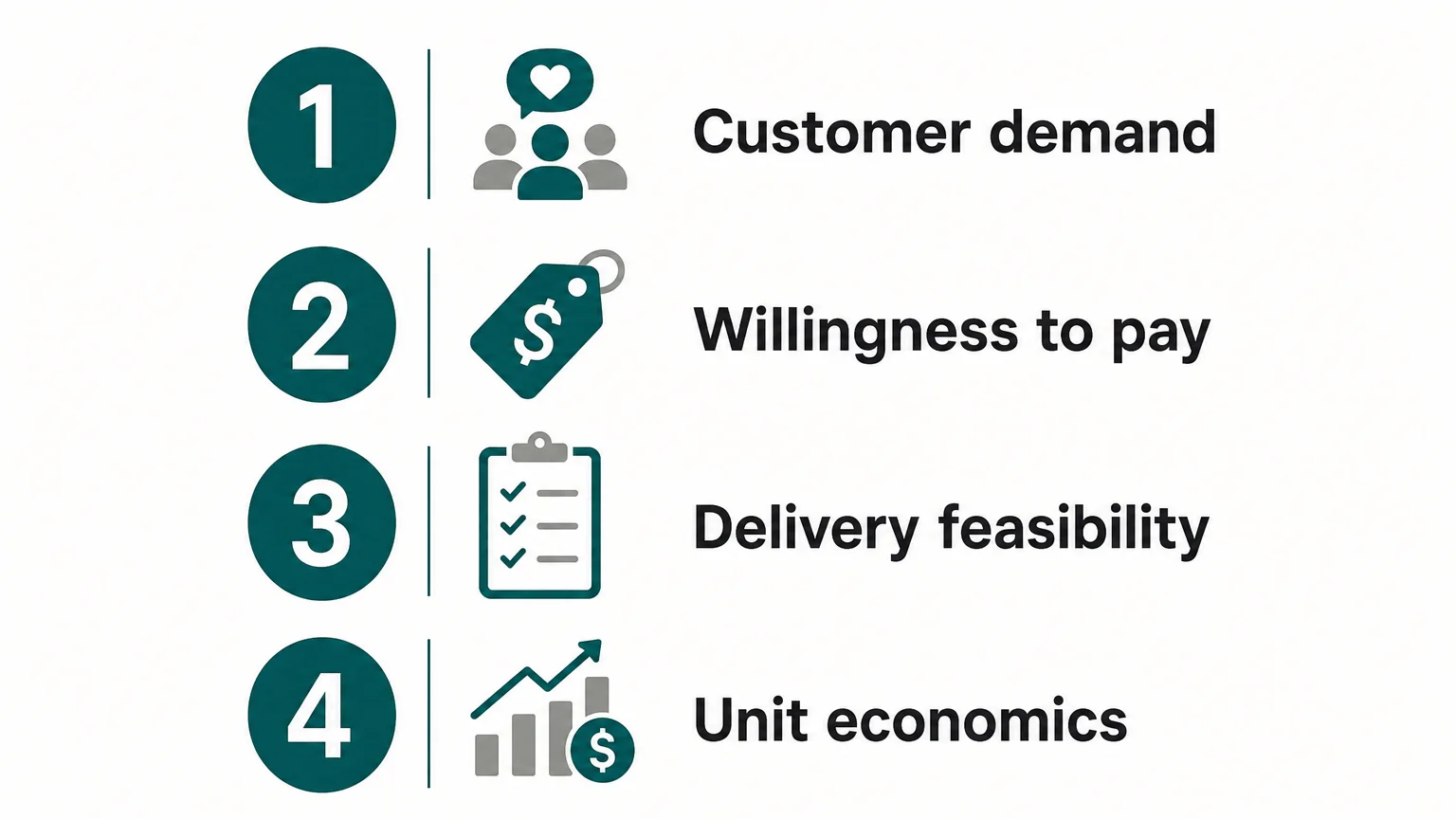
Before expanding a pilot, check whether the model can work beyond the initial test. Can you reach enough of the intended customers? Do they understand the offer and pay at a level that can support delivery? Can your team provide it consistently without costs, skills, or partnerships that the organization cannot sustain?
Also account for the transition. A change in customer, channel, or revenue model can require new skills, systems, communication, and resource allocation. Keep the old model only when it genuinely supports the new one and your team can operate both without losing focus. Otherwise, estimate what to phase down and what the change will require.
Long-term comparisons can provide context, but they do not predict an individual company’s results. In PwC’s 2026 research on 1,843 large enterprises, organizations that fundamentally renewed their business models showed higher average revenue than comparable companies after a transition period. That finding concerns large enterprises and reported group-level patterns, not a guaranteed outcome for a particular pivot. It reinforces the need to plan for a transition rather than expect immediate gains.
Track a small set of measures tied to your hypothesis: customer conversion, repeat use, revenue per customer, gross margin, delivery time, or acquisition cost. Compare results with the current model over a defined period, and note any differences in customer type or test conditions. A business model portfolio can help you compare possible directions and clarify which assumptions each option depends on.
How can you avoid common pivot mistakes?
A frequent mistake is changing too many things at once. If the customer, offer, channel, pricing, and operations all change together, a positive or negative result may be difficult to interpret. Change the fewest elements needed to test the central uncertainty.
Another risk is confusing activity with evidence. More features, new branding, and additional marketing may make a new direction look busy without showing that customers want it or the economics work. A clear test should connect the change to a customer response and a business outcome.
Finally, do not assume that an established company can simply behave like a new venture. Existing customers, systems, revenue, and team capabilities can make a transition more complex. Consider what to preserve, what must change, and how decisions will be communicated. Our perspective on why large companies cannot innovate may help leaders examine the organizational obstacles that can complicate strategic change.
Make the pivot a testable decision
A business model change is most defensible when repeated evidence challenges a core assumption, and a specific alternative can be tested. Separate the customer problem from the way your business currently solves it, then measure demand, willingness to pay, delivery feasibility, and economics. You do not need certainty before exploring a new direction, but you do need clear evidence thresholds and a realistic plan for the transition.
Make Strategic Change Easier to Evaluate
When a possible pivot involves several customers, offers, or revenue choices, clear communication helps decision-makers compare the trade-offs. A structured visual narrative can make assumptions and evidence easier to discuss with your team.

We bring strategic frameworks, structured storytelling, and board-ready visual design together in presentation assets built for PowerPoint, Google Slides, Figma, Canva, and more. Explore our visual strategic-thinking assets to organize complex analysis and present strategic choices with clarity.
Frequently Asked Questions
What is a business model pivot?
It is a deliberate change to a core part of how a business creates, delivers, or captures value. The change might affect its customers, offer, revenue model, channels, or operations.
How is a pivot different from a business model iteration?
An iteration improves or adjusts an existing approach while keeping its central logic. A pivot changes a fundamental assumption because evidence suggests the current model may not work as intended.
When should a business consider pivoting?
Consider it when repeated customer, market, financial, or operational evidence challenges a key assumption. Investigate the cause before deciding, since a weak result may call for a focused improvement rather than a new model.
How can you test a business model pivot?
Choose a small experiment that tests the riskiest assumption, such as a limited pilot or a paid offer. Define success and stopping criteria in advance, then compare customer response and costs with your current approach.
What can help leaders communicate a proposed pivot?
Use a clear narrative that connects the evidence, the proposed change, its risks, and the decision criteria. Our visual strategic-thinking assets can help organize complex analysis into presentations for team, executive, or board discussions.