Global enterprises need more than a polished annual update: they need a clear account of the choices, evidence, and actions that connect regions. Well-built strategy decks for global enterprises link corporate priorities to local decisions without drowning executives in detail. If you are shaping the planning narrative, our strategic planning presentation template offers a starting point for organizing the story.
A strategy deck is not the strategy itself. It communicates the choices behind the plan, explains why those choices matter, and makes clear what decisions or actions are required. In a global organization, that means balancing a consistent enterprise direction with differences in markets, regulations, customers, and operating conditions.
What should an enterprise strategy deck make clear?
Start with the decisions the deck needs to support. Is leadership choosing where to invest, which markets to prioritize, how to respond to a competitor, or what to stop doing? State the decision early, then structure the evidence around it.
A persuasive strategic narrative connects the organization’s situation to its choices. Show the relevant market or capability evidence, explain the trade-offs, and make the logic between the two explicit. Executives should not have to infer why a priority follows from the analysis.
Global growth makes this discipline especially relevant. In EY-Parthenon’s 2026 study of 1,200 global executives, 91% said their organizations were pursuing some form of international growth strategy. The study also found that 52% said geopolitical constraints had materially reduced commercial viability in certain markets, making a clear account of assumptions and choices important. EY’s 2026 study provides the findings and survey context.
Build the story around choices, not slide volume
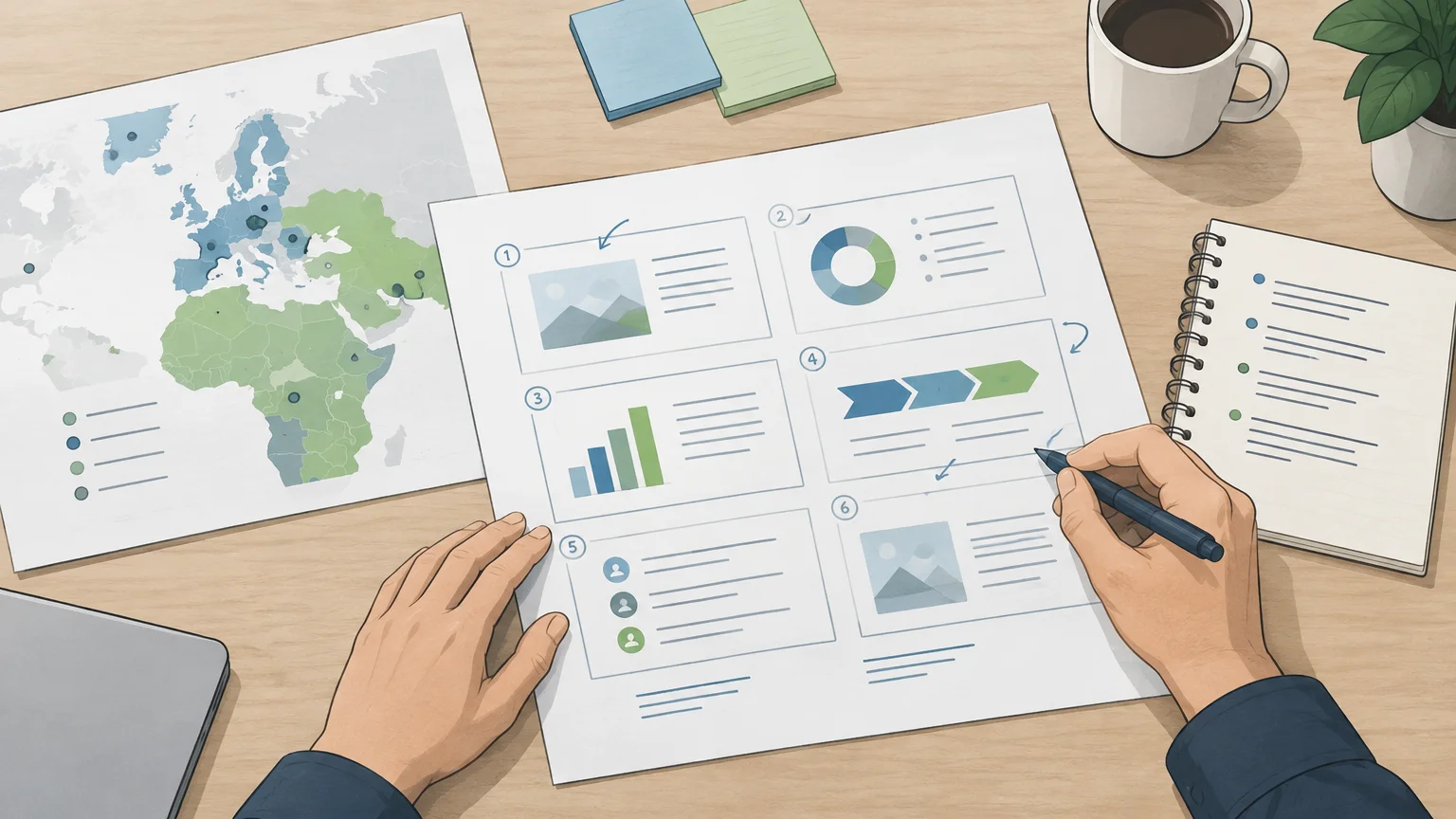
Imagine a board discussion where leaders have limited time to weigh two competing investments. A deck that begins with background and activity delays the decision. A deck that opens with the choice, the rationale, and the implications helps the room focus.
Use action-oriented slide titles that express the takeaway, rather than labels such as “Market overview.” Then make each slide contribute one step to the argument. A concise title sequence should tell the story even when someone scans the deck before a meeting.
Deloitte’s 2026 Global CSO Survey, based on 148 strategy leaders surveyed from September to November 2025, describes rising expectations for delivery, coordination, and return on investment amid organizational complexity and limited capacity. That context supports treating the deck as a tool for clarifying ownership and priorities, not just presenting analysis. Deloitte’s survey report outlines the findings and methodology.
Use a consistent structure for the core argument: the strategic question, the evidence, the choice, its implications, and the decision or action required. If you need examples of strategy-slide structures, our McKinsey strategy slides page can inform how you organize a consulting-style storyline.
How do you align global and local perspectives?
In a global organization, a single enterprise priority can require different actions across regions. The deck should separate what must remain consistent from what local leaders can adapt. For instance, a company may share a global customer promise while tailoring its route to market to local conditions.
Make the distinction visible. Give enterprise priorities a shared definition, then identify regional implications, accountable owners, and any material differences in assumptions. This helps leaders compare local plans without mistaking uniform formatting for uniform strategy.
Cascade’s 2026 State of Strategy Report, based on a global survey of 1,112 professionals, found that 81% said their departments pulled in different directions, while 27% said teams below the executive level understood priorities and how their work contributed. These are survey responses, not a measure of every enterprise, but they highlight why shared priorities need clear explanations and links to work. Cascade’s 2026 report gives the survey details.
When teams need a structured way to explore the choices before presenting them, our strategic thinking templates support analysis and organization of ideas. Use them to clarify the thinking, then tailor the narrative to the leaders who will act on it.
Design the deck for decisions and follow-through
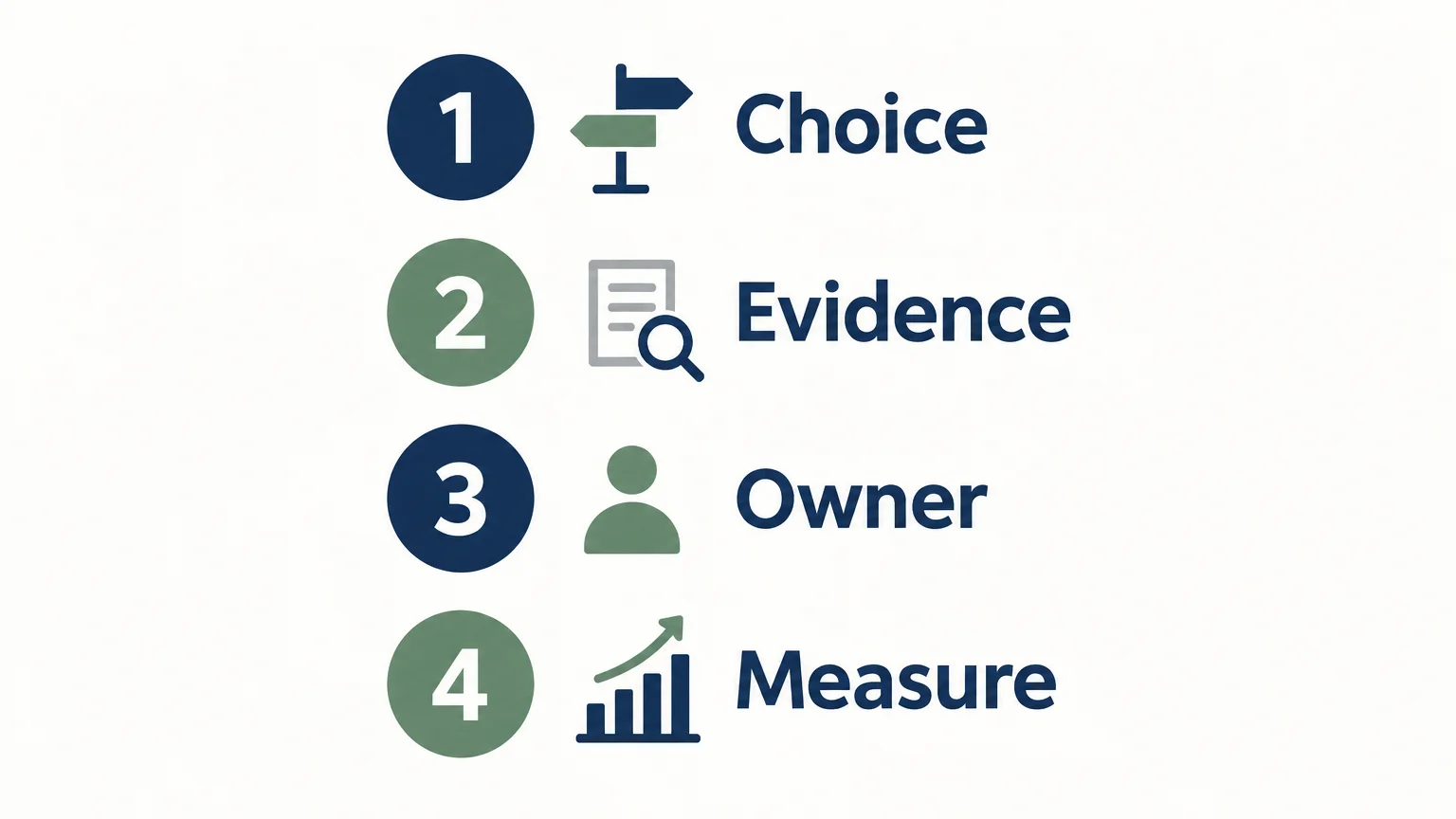
A decision-ready deck answers four practical questions: What is the choice? What evidence supports it? Who owns the next action? How will progress be assessed? Put these answers where readers need them, rather than leaving ownership and measures in an appendix.
Match visual form to the message. Use a chart when comparison matters, a simple framework when relationships matter, and a short action list when accountability matters. Keep definitions, units, and time periods clear, especially when regions report similar measures differently. Avoid adding detail simply because it is available.
For organizations expanding internationally, local conditions also deserve space in the decision logic. HSBC’s 2026 study covered 2,700 businesses across 18 markets that had expanded overseas in the previous two years or planned to do so soon. Its research examined how these businesses were adapting expansion plans, underscoring the value of showing market assumptions rather than presenting global growth as one uniform path. HSBC’s expansion study describes its scope and findings.
Before circulation, check that each slide has a clear point, that evidence supports the point, and that the requested decision is explicit. Then review the deck from a regional leader’s perspective: are shared priorities understandable, and are local responsibilities specific?
What should you standardize across the deck system?
Standardize the elements that make comparison and reuse easier: terminology, action-title conventions, visual hierarchy, evidence labels, and the way decisions and owners are shown. Keep room for market-specific evidence and local implications. A shared format should make differences easier to interpret, not hide them.
Platform needs matter as well. Our presentation materials are built for PowerPoint, Keynote, Figma, and more; check that the specific assets you select suit your organization’s workflow. The library brings together board-ready frameworks, narrative structures, and slide systems for making strategic thinking visible and readable.
If you are preparing a leadership or board presentation and need a structured starting point, our consulting presentation templates address strategy communication through presentation-ready frameworks and storytelling. Adapt the structure to your organization’s decisions, language, and regional context.
Make the strategy clear enough to act on
Strategy decks for global enterprises work when they connect choices to evidence, distinguish enterprise direction from local action, and make ownership visible. Begin with the decision, build a logical narrative, and standardize the elements that help teams understand one another. Then test the deck with the people expected to use it: can they explain the priorities, trade-offs, and next steps without extra interpretation?
Bring Strategic Thinking Into Clearer Slides
When strategic choices are complex, the challenge is to make the reasoning clear to executives and regional teams alike. A structured narrative and considered visuals can help keep attention on the choices, evidence, and actions that matter.
Our library brings together premium slide decks, strategic-thinking templates, board-ready frameworks, narrative structures, and slide systems. Explore Deckadence’s visual strategic-thinking library for materials built for PowerPoint, Keynote, Figma, and more, and find an approach suited to your presentation needs.
Frequently Asked Questions
What belongs in a global enterprise strategy deck?
Include the strategic question, supporting evidence, choices and trade-offs, regional implications, and the decisions or actions required. Keep the main narrative focused, with detailed analysis available when readers need it.
How can a strategy presentation support regional alignment?
Define enterprise priorities consistently, then explain how each region contributes and where local conditions change the response. Name owners and clarify measures so teams can connect shared direction to their work.
How long should an executive strategy presentation be?
There is no universal slide count that suits every decision. Include only the material needed to establish the context, support the choice, explain implications, and secure the next action.
How do you make strategy slides clearer?
Give each slide one main point, use a title that states its takeaway, and support it with relevant evidence. Remove details that do not help the audience understand or act on the decision.
What resources can help structure a strategy presentation?
Deckadence’s strategic-thinking materials include frameworks, narrative structures, and slide systems for organizing and communicating strategic ideas. Choose resources that fit the decision and verify that the specific assets suit your presentation platform.