Presentation Templates for Agencies: A Practical Selection Guide
A prospect often forms an impression before reading every slide. The order of your story, relevance of your proof, and clarity of the decision all matter. The right presentation templates for agencies give your team a reusable structure without flattening each client’s context. To assess a strategy-focused option, start with our best consulting presentation templates.
A template should reduce repeated layout work while leaving room for strategic judgment. That means choosing a format for the work at hand, whether you are pitching a new client, explaining a recommendation, presenting results, or showing your agency’s capabilities. Before adopting one, check whether its story, visual system, software support, and usage terms fit your real workflow.
A deck succeeds when it answers a client question
Imagine a client opening a performance report and asking, “What changed, and what should we do next?” A deck that leads with an answer, supports it with relevant evidence, and ends with a clear action is more useful than a string of attractive slides.
That distinction matters in agency reporting. Among the 494 agency professionals surveyed in the 2026 agency benchmark survey, 97% said accurate reporting was important or extremely important for client retention. The figure does not show that a template causes retention. It underscores the value of making evidence and interpretation easy to follow.
Use this principle across client work: give each slide one job, write its headline as the takeaway, and include only the evidence needed to support it. A clear client presentation narrative helps clients understand the recommendation instead of having to infer it from charts and fragments.
Use a distinct structure for each agency moment
A pitch, a proposal, and a case study answer different questions. A single master deck can supply common visual components, but each presentation needs its own sequence and emphasis.
- Agency pitch deck template: Establish the client’s challenge, your point of view, relevant proof, proposed approach, and the decision you want.
- Proposal deck: Set out the objectives, scope, work plan, responsibilities, timeline, and commercial terms clearly.
- Case study deck: Explain the starting situation, your work, the evidence of change, and what the result means. Keep claims tied to the specific project.
- Capabilities presentation: Show the problems you solve, the expertise relevant to the audience, and examples that demonstrate your approach.
- Recurring report: Summarize performance, explain why it changed, and state the recommended next steps.
Choose a template based on the client’s decision, not the agency’s preferred slide count. For example, a prospective client evaluating a campaign proposal needs a focused recommendation and credible plan, not a full history of every service your agency provides.
Make strategic recommendations visible
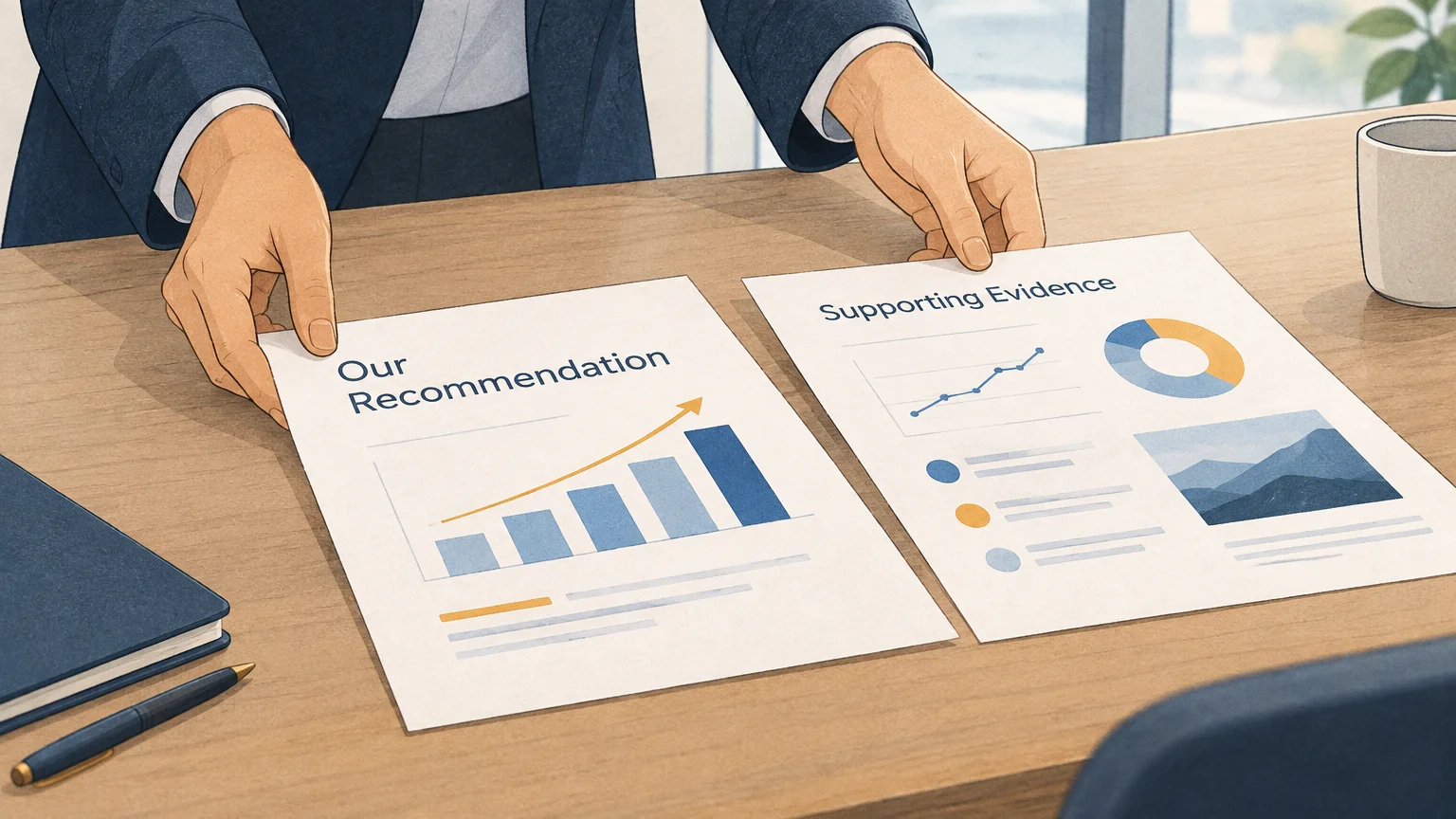
A creative agency presentation template should help the audience see how your reasoning leads to a recommendation. Arrange slides so that each section answers a practical question: What is happening? What matters? What should change? How will the team act?
Use action titles to make that logic visible. Instead of “Audience Analysis,” write the finding your evidence supports. Follow it with a chart, example, or concise explanation that answers the title. Then make the next slide advance the argument, rather than repeat the same point in another format.
For agency work involving strategy, our consulting presentation structure offers a relevant reference for organizing a strategic narrative. Our presentation materials combine strategic frameworks, structured storytelling, action titles, concise messaging, and evidence-driven storytelling. Treat these as tools for communicating your own analysis, not substitutes for it.
Check the template before making it your standard
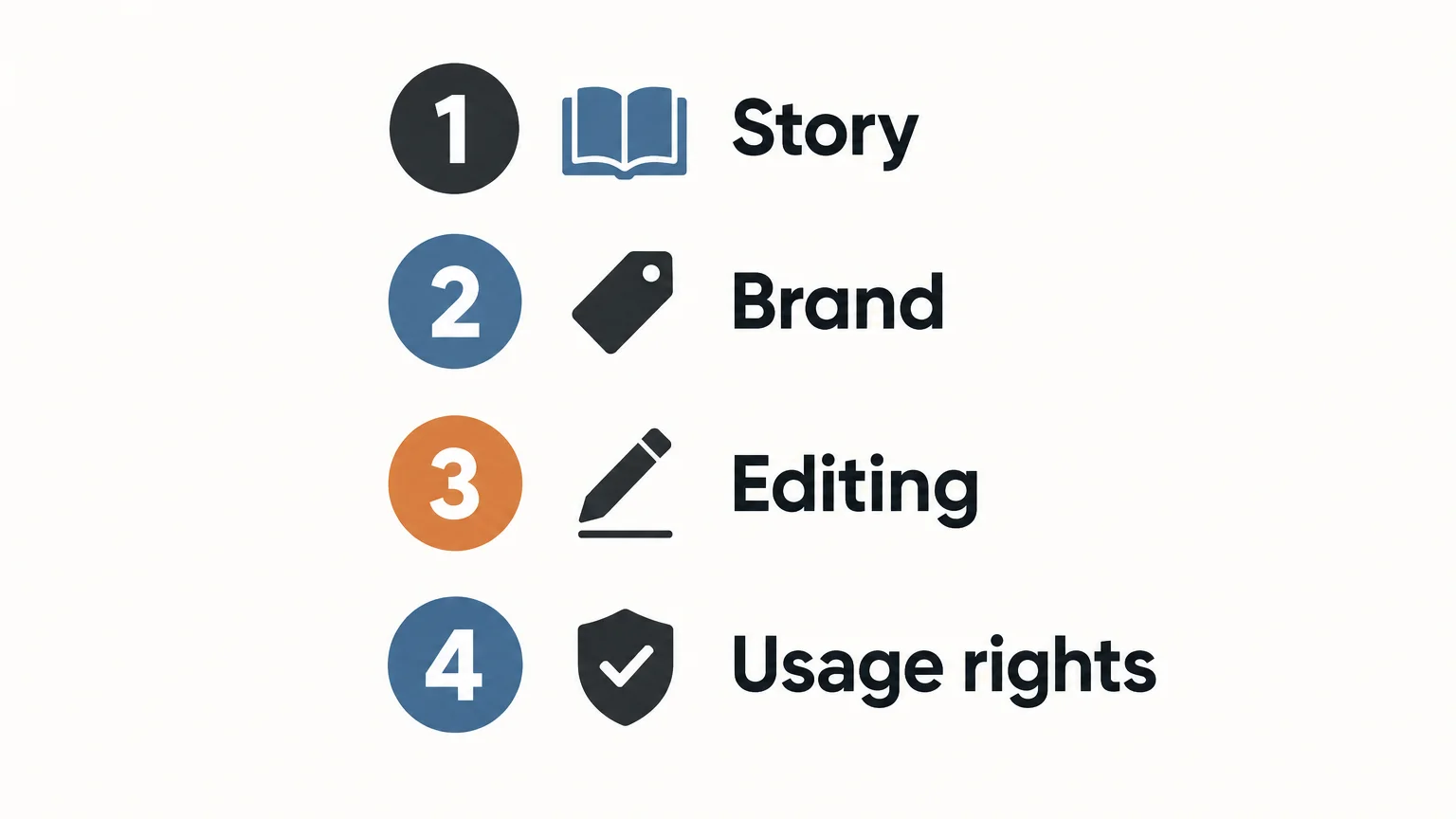
Before rolling a template out to a team, test it against a real presentation. Check whether the framework supports the story you need and whether your agency can adapt its visual style without rebuilding every slide.
- Narrative fit: Can you present the client’s issue, evidence, recommendation, and next step in a logical order?
- Brand adaptation: Can you apply your agency’s colors, type, and visual conventions while keeping slides readable?
- Editing and software: Confirm the exact file format and the elements you can edit in your chosen platform. Do not assume that opening a file means every component is editable.
- Usage rights: Review the license for team use, client delivery, modifications, and any portfolio examples.
- Reuse: Identify which layouts can serve multiple clients and which require a project-specific treatment.
Then compare the time saved with the effort required to adapt and maintain the slides. Our guide to measuring the value of consulting templates provides a useful lens for evaluating template use in client work.
Keep a reusable system without making every deck look alike
A practical library combines consistent foundations with a few project-specific layouts. Standardize elements that support recognition and readability, such as title treatments, chart styling, and page numbers. Let the evidence, client context, and recommendation determine the content and visual emphasis of each deck.
For recurring reports, use a sequence that makes interpretation part of the presentation. A 2026 client reporting guide recommends presenting the verdict first, evidence second, detail third, and next steps last. Adapt that sequence to the client and the decision, rather than treating it as a universal script.
Consistency should make your team’s work easier to follow, not make every project interchangeable. Keep a small set of flexible layouts, document when to use them, and review them against actual client presentations. Update the system when repeated work exposes a gap.
Choose for the work, not the mockup
The right agency presentation templates help your team explain its thinking, adapt to each client, and make the requested decision clear. Start with the audience and purpose, then test the story, branding, editing, platform support, and rights in a real deck before adopting the format across your agency.
Bring Strategy and Design Together
When your agency presents strategic work, a reusable framework should support both the thinking and the communication. Our library brings together premium slide decks, strategic-thinking templates, board-ready frameworks, narrative structures, and slide systems for agencies, consultants, and decision-makers.
Our materials are built for PowerPoint, Keynote, Figma, and more. They combine strategy frameworks, structured storytelling, concise messaging, action titles, and refined visuals to help make complex ideas clearer and easier to discuss. Explore our visual strategic-thinking library for resources relevant to your agency workflow.
Frequently Asked Questions
What should an agency pitch deck include?
Start with the client’s challenge, then explain your perspective, relevant evidence, proposed approach, and the decision you are seeking. Keep service details and credentials tied to the client’s needs.
How is a proposal deck different from a capabilities deck?
A proposal describes the work planned for a specific client, including scope, responsibilities, and timing. A capabilities deck explains the problems your agency addresses and the relevant experience it brings.
What should you check before adopting an agency template?
Review its narrative fit, branding flexibility, file format, editability in your chosen platform, and usage rights. Test those details with a real project before making the template a team standard.
Should every client presentation use the same design?
A shared visual system can create consistency, but the content and emphasis should reflect each client’s context. Reuse layouts where they help, and adapt them when the evidence or decision requires a different approach.
How can Deckadence support agency presentations?
Our library includes premium slide decks, strategic-thinking templates, frameworks, narrative structures, and slide systems for agency and consulting presentations. The materials are built for PowerPoint, Keynote, Figma, and more.