How to Measure the Value of Consulting Templates in Client Work
A polished slide is not automatically a useful consulting asset. A valuable consulting template helps you move from a client question to structured analysis and an actionable recommendation, without forcing every project into the same story. If you are comparing formats, our consulting presentation templates page offers a starting point for exploring presentation assets.
A reusable format should protect the reasoning, not standardize it away. The Presentation Guild’s 2025 report gathered voluntary, self-reported input from more than 300 presentation professionals across 36 countries, including consultants and business leaders. Its findings describe workflows and tools, not template return on investment, but show that presentation work extends beyond slide design. The 2025 profession report provides context for the range of work involved.
Where does a consulting template create value?

A template earns its place when it makes sound work easier to repeat. It should help you clarify the question, choose a fitting analytical structure, organize evidence, and explain what the client should do next. The value is not the layout alone; it is the working sequence the layout encourages.
For example, a market-entry assessment might move from the client’s decision, to market evidence, to risks and options, and finally to a recommendation. A reusable structure helps you see missing reasoning before presenting. It still needs adaptation: the client’s evidence, constraints, and decision cannot be filled in by a generic slide.
That distinction is increasingly relevant to consulting work. In a 2026 study of 1,700 C-suite executives overseeing sizeable consulting contracts, IBM describes an AI-first consulting model oriented around outcomes, reusable assets, and capability transfer. This is a useful lens for assessing a template, not evidence that templates alone produce business outcomes. IBM’s 2026 consulting study connects reusable assets to a broader shift in how organizations evaluate consulting work.
To make the structure serve your client, begin with the decision the presentation must support. Our guide to consulting presentation structure is relevant when you need to organize the narrative from the problem through the recommendation.
A proposal deck and a strategy deck need different templates
The right format follows the deliverable, not a general preference for more slides. A proposal needs to make the client’s issue, scope, approach, and next step easy to understand. A diagnostic presentation needs to organize findings and evidence. A recommendation deck needs to make the choice, rationale, and implications clear.
Consider the template’s job before you choose it:
- Proposal template: Clarify the client need, scope, approach, and expected deliverables.
- Diagnostic template: Group findings around the problem and distinguish evidence from assumptions.
- Strategy analysis template: Apply a framework that fits the question, such as competitive forces or external factors.
- Recommendation template: Connect the proposed action to supporting evidence, risks, and next steps.
- Executive summary template: Surface the central finding and decision without requiring the audience to reconstruct the argument.
A framework is useful only when its structure matches the question. A competitive analysis, for instance, should help you examine competition; it should not become a decorative set of boxes that the evidence does not support. If the client question concerns customer needs and the offer, our value proposition canvas template gives you a relevant framework to consider. For presenting a concise customer-facing claim, our unique value proposition template is another related resource.
Our strategy guide covers more than 15 frameworks and includes a framework selection guide. That learning support matters when you need to choose a model for the analysis, rather than simply select a slide design.
Test the template against the client decision
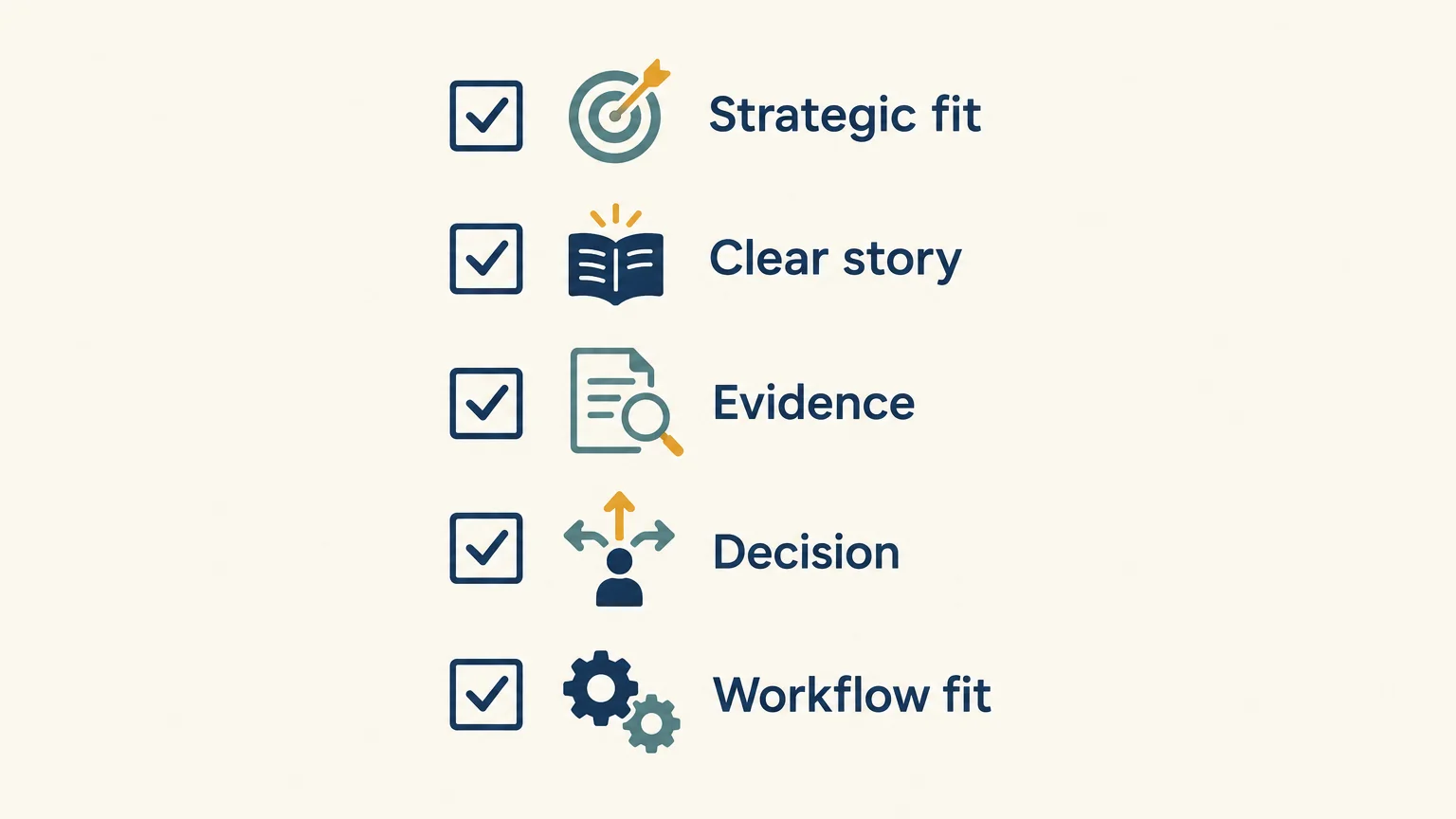
Before using a template on a live project, assess whether it supports the actual decision. Check these criteria:
- Strategic fit: Does the framework answer the question, or does it lead you toward an unrelated analysis?
- Clear storyline: Can a reader follow the path from the client’s problem to evidence and recommendation?
- Evidence: Is there space to show the source and meaning of key findings, rather than presenting unsupported claims?
- Decision support: Does the final section make the choice or action clear to the intended audience?
- Workflow fit: Can you use the material in your existing presentation process? Our materials are built for PowerPoint, Keynote, Figma, and more, though platform features and editability should be checked for the specific asset.
Audience attention is another practical test. A February 2026 AhaSlides survey of 1,048 US-based professionals who present at least monthly found that 82.4% regularly noticed audience distraction. This is a survey finding, not a universal measure of every presentation audience. It nonetheless supports a useful design check: make the main point easy to find and keep supporting detail in service of it. The 2026 survey results offer one indication of the attention challenge presenters reported.
What evidence shows the template paid off?
Assess value across repeated use, not one attractive first draft. Before adopting a template, note how long similar work takes to structure and prepare, how many review cycles it requires, and where clients commonly ask for clarification. After using it, compare those observations with the new project, while accounting for differences in scope and complexity.
Track a few signals that relate directly to your purpose: time spent organizing the story, revisions needed to make the recommendation clear, missing evidence caught before the client review, or whether decision-makers understood the requested action. These measures are useful only when you compare similar work. A faster deck is not an improvement if it obscures analysis or leaves the client unsure what to do.
Make a brief post-project judgment: keep the template as is, adapt it, or stop using it. Record which parts supported the work and which constrained it. Over time, this creates a practical library shaped by your project experience, rather than a collection of layouts chosen for appearance alone.
Conclusion: choose a template by the decision it supports
The value of a consulting template comes from how well it connects a relevant framework, credible evidence, and a clear client decision. Choose a format that fits the deliverable, adapt it to the client’s problem, and review its impact against comparable projects. Reuse the structure when it improves clarity and workflow; revise it when it limits the reasoning.
Build a clearer consulting presentation workflow
When you need more than a polished layout, choose materials that help you structure strategic thinking and communicate a recommendation. A useful presentation system should support the work from analysis through the decision, while leaving room for the client’s evidence and context.
Our library brings together strategic-thinking templates, board-ready frameworks, narrative structures, and slide systems for consultants, agencies, executives, and business leaders. Our strategy guide covers more than 15 frameworks and includes a framework selection guide, while our presentation materials are built for PowerPoint, Keynote, Figma, and more. Explore our visual strategic-thinking assets to find resources relevant to your next client presentation.
Frequently Asked Questions
What makes a consulting template valuable?
It gives your analysis a useful structure and helps you communicate evidence and recommendations clearly. Its value depends on whether it fits the client’s problem and supports the next decision.
Do consulting templates replace analytical work?
No. A template organizes your work, but you still need to gather evidence, test assumptions, and make a recommendation suited to the client.
How should you choose a framework for a consulting presentation?
Start with the question the client needs answered, then select a framework that helps analyze that question. Avoid forcing a familiar model onto evidence it does not explain.
How can you measure whether a template saves time?
Compare preparation time and revision cycles across similar projects, and note differences in scope. Also check that time savings did not reduce clarity or weaken the analysis.
What resources does Deckadence provide for consultants?
Our library includes premium slide decks, strategic-thinking templates, board-ready frameworks, narrative structures, and slide systems. Our strategy guide also covers more than 15 frameworks and includes a framework selection guide.