How to Choose a Competitive Analysis Presentation Template
What should your audience decide after reviewing your competitor research? Start there. A competitive analysis presentation template is useful when its structure helps you answer that question, not merely display a grid of features. For a consulting-style narrative, you can explore our consulting presentation templates.
The analysis itself still depends on sound research. Your deck needs a defined market and customer, comparisons that matter to them, and evidence that supports each claim. A polished layout can make those points easier to follow, but it cannot make incomplete or outdated information reliable. Build the argument first, then select slides that make it clear.
Start with the decision, not the competitor list
What question must the analysis resolve? You might be assessing which customer segment to prioritize, where a product needs to differentiate, or how a competitor’s new offer changes your position. State that decision, the audience, and the scope before gathering evidence. This keeps the deck focused on information that could affect the choice.
Define the market, customer group, geography, and period you are examining. Then identify relevant alternatives. These may include direct competitors, substitutes, and the status quo, such as an existing process or choosing not to buy. Explain why each alternative belongs in the comparison. A long list of familiar companies is less useful than a smaller set that reflects the choices your audience actually faces.
Your audience should shape the level of detail. Executives generally need the central finding, its implications, and the decision required. Product teams may need clear definitions for comparison criteria, while sales teams may need buyer-relevant differentiators and supporting evidence. If several groups will use the deck, identify its primary audience and put supplementary detail in the appendix.
What should a competitive analysis presentation template include?
Imagine an executive opens your deck with only a few minutes to understand the issue. A clear sequence gives that reader a path from the decision to the evidence and then to the recommended response. The specific slide count can vary; the reasoning should remain easy to follow.

A practical slide sequence might open with the decision and recommendation, define the market and scope, and introduce the selected competitors. It can then show a comparison matrix, positioning map, and customer or market evidence. Close with strategic implications, an action plan, and an appendix for detailed source notes. The presentation structure should support the analysis, not force every project into identical slides.
Include enough context to make the comparison fair. Define the buyer or use case, state the period covered, and explain any relevant assumptions. A competitor matrix should compare the same criteria for each entry. If an item is unknown or not checked, label it accordingly rather than filling the gap with a guess.
An EdTech Books example provides a reference for structuring competitor-analysis material as a presentation. Use any sample sequence as a starting point, then adapt it to the question, audience, and evidence in your own analysis. Our evidence-based presentation templates are designed around structured storytelling and evidence-driven communication.
Choose visuals that fit the comparison
Suppose you are comparing products on a handful of buyer priorities. A matrix makes the criteria easy to scan, while a positioning map can show how alternatives differ across two meaningful dimensions. The right visual depends on what the audience needs to understand, not on which chart looks most impressive.
Use a comparison matrix when the audience needs to assess the same features, capabilities, or customer outcomes across alternatives. Keep the criteria focused on the decision. If the matrix becomes too wide or dense, show the most consequential rows in the main deck and move the complete comparison to supporting slides.
A positioning map can clarify a trade-off, provided its axes describe meaningful buyer priorities. For example, a map might compare degree of customization with ease of implementation. Explain what each axis means and identify the audience or use case behind the placements. Do not present a team’s interpretation as an objective market ranking.
Use charts when the data supports them. A time series can show change over time; a bar chart can compare values across competitors. Add a short takeaway close to the visual so the audience understands why it matters. Avoid using numerical ratings without defined criteria or weights, since a precise-looking score can hide judgment rather than explain it.
For a strategic planning presentation, connect competitor findings to the choices your organisation must make. Our strategic planning presentation template provides a relevant starting point for communicating strategic priorities and decisions.
Make every comparison traceable
A comparison becomes more useful when a reader can see where its claims came from. Record the source and date for important evidence, and distinguish what you observed from what you inferred. That is especially important for competitor pricing, features, and market claims, which can change over time.
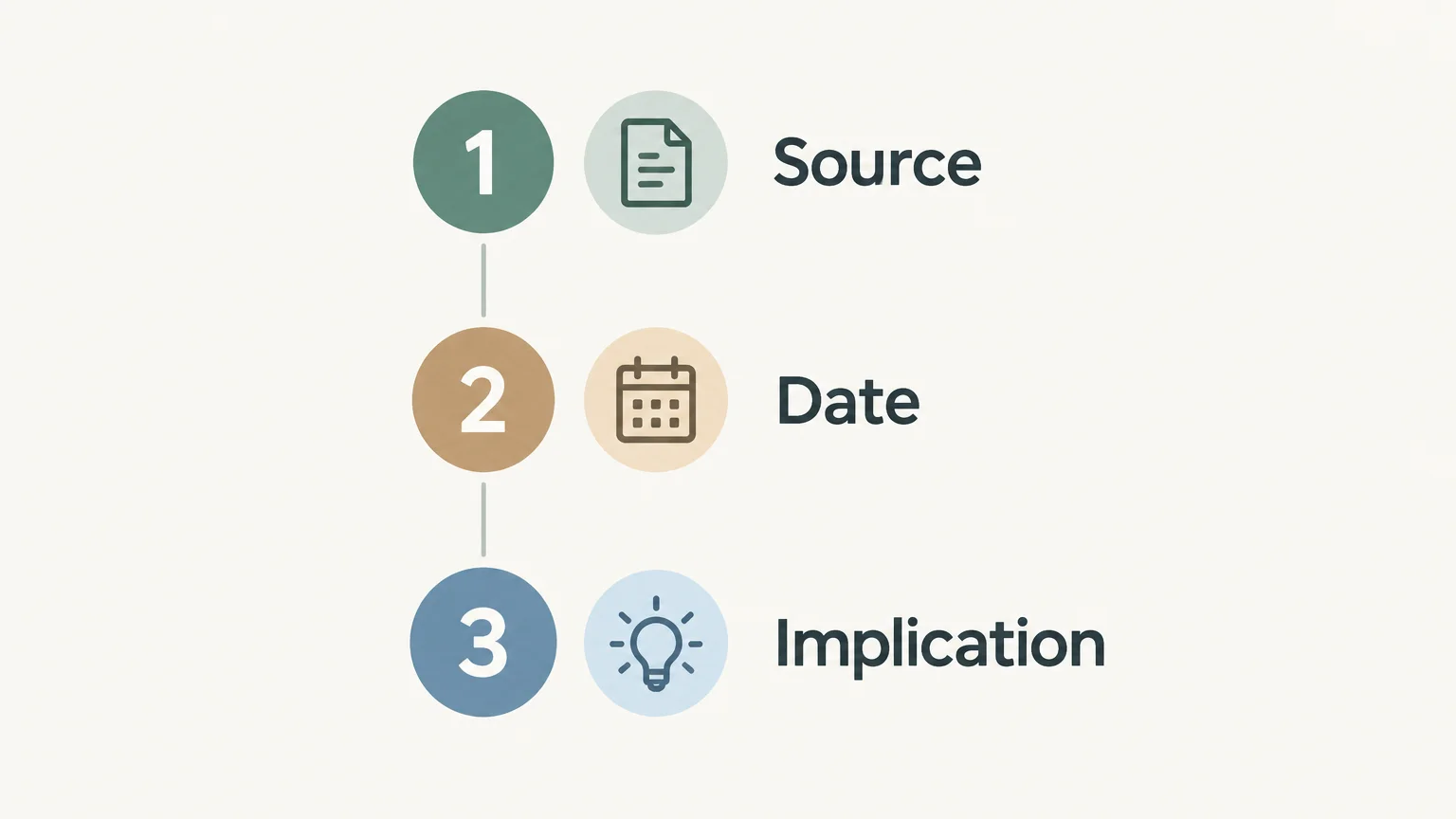
A useful evidence log can note the claim, source, observation date, and whether it is observed, reported, inferred, or still a hypothesis. Add an owner or follow-up date when a finding needs confirmation. This helps readers distinguish a verified product detail from a competitor’s own marketing claim or an interpretation of several signals.
The American Advertising and Marketing Association’s competitive analysis worksheet includes prompts for recording evidence, dates, confidence, and implications. Apply the same discipline in your slides. If a comparison includes estimates or forecasts, label them separately from historical results. A CFA Institute student report, for example, marks actual and projected periods distinctly in its financial tables.
Make uncertainty visible where it changes how a finding should be interpreted. If a source is incomplete, identify the gap and avoid treating it as proof that a competitor lacks a capability. If comparisons use different versions, plans, or periods, state the difference. Put detail in notes or an appendix, but keep the essential evidence trail close enough for the audience to understand the main claim.
End with an action, not a score
Imagine your analysis reveals that a competitor is attracting attention with a feature your customers rarely prioritize. The finding becomes useful when you explain what it means for your business, such as whether to strengthen a different benefit, investigate customer needs, or change the segment you target.
Translate each major insight into an implication and a next step. A clear recommendation names the action, its owner, and a review point. For example, if customer interviews suggest that ease of onboarding matters more than a long list of features, test a simpler onboarding message with the relevant audience and decide when to review the results.
A decision-focused narrative helps keep the deck from ending at a visual ranking. State where your organisation is positioned, what evidence supports that interpretation, and what choice follows. Our strategic thinking templates provide structured visual frameworks for organising and communicating strategic choices.
Before presenting, check that the comparison uses consistent criteria, that evidence and assumptions are distinguishable, and that the requested decision is explicit. Remove details that do not affect the conclusion, or place them in the appendix. A focused deck makes room for questions without obscuring what the analysis recommends.
Choose a template that serves the decision
The right competitive analysis presentation structure helps your audience move from the market context to a fair comparison, credible evidence, and a specific action. Define the decision first, select visuals that make the relevant differences clear, and label sources, dates, and uncertainty. Then adapt the slides to the audience rather than letting a template dictate the argument.
Make strategic thinking clear on the page
Competitive research becomes more useful when its logic is easy to follow. If you are preparing a leadership or client presentation, choose visual structures that connect analysis, evidence, and strategic choices without crowding the main message.

Our library brings together strategic frameworks, narrative structures, and slide systems for communicating complex ideas. The materials are built for PowerPoint, Keynote, Figma, and more. Explore our visual strategic-thinking assets to find presentation materials that suit your work.
Frequently Asked Questions
What should a competitive analysis presentation include?
Include the decision, market scope, relevant competitors, comparison criteria, supporting evidence, implications, and next steps. Keep detailed research and source notes in supporting slides when they would distract from the main argument.
How many competitors should I compare?
Choose the alternatives that could materially affect the decision, including substitutes or the status quo when relevant. A focused set is easier to compare consistently than a long list of names.
Which visual works best for competitor comparisons?
Use a matrix when readers need to compare the same criteria across alternatives. Use a positioning map when two meaningful dimensions clarify a buyer-relevant trade-off, and explain the axes and assumptions.
How do I make competitor data credible?
Record the source and date for important claims, and distinguish observed evidence from interpretation or hypothesis. Mark unknowns clearly and label estimates separately from historical data.
Can a strategy-focused presentation template support competitive analysis?
Yes, when its frameworks and narrative structure suit the question you need to answer. Our strategic-thinking assets are built for communicating analysis and strategic choices across PowerPoint, Keynote, Figma, and more.