A strategy presentation succeeds when an audience can see the choice, the evidence behind it, and what happens next. A brand strategy presentation template should make that logic visible, not simply package colors and logos. If your work connects brand decisions with broader planning, our strategic planning presentation template explains an adjacent way to structure strategic choices.
The right template is not defined by its slide count. It is defined by whether its sections help you explain the brand’s position, support that position with relevant insight, and align the audience on practical implications. Start with the decision you need from your audience, then assess whether the template gives each part of the argument a clear place.
What should a brand strategy deck clarify?
Imagine presenting a new brand direction to leaders who disagree about the problem. One person sees an awareness issue, another sees weak differentiation, and a third is concerned about customer retention. A useful deck establishes the situation before proposing an answer, so the audience can follow how the recommendation responds to the evidence.
Look for space to articulate the brand positioning, priority audience, competitive context, and basis for differentiation. The template should also help you define the brand promise and show how it relates to the organisation’s broader choices. Keep strategy distinct from execution: campaign ideas and visual assets matter, but they should follow from the strategic direction rather than substitute for it.
A practical test is to draft the central recommendation in one sentence. If the template has no natural place for the recommendation, the evidence supporting it, and the trade-off it implies, its structure may not serve the discussion. A brand deck should make the choice understandable, not simply list familiar branding topics.
Which slide sequence makes the story easy to follow?

A presentation becomes easier to follow when each section answers a question raised by the previous one. A useful sequence often moves from the business context to audience insight, then to competitive choices, positioning, brand expression, and implications for action. Treat these as connected parts of one argument, not separate topics competing for attention.
Use action titles to state each slide’s takeaway. “Customers value convenience, but see little difference between providers” gives the audience a finding to remember. A generic title such as “Customer Research” only labels the material. Supporting details belong below the takeaway, with methods, secondary findings, or additional charts reserved for an appendix when they are not necessary to understand the recommendation.
Check the transition between every major section. The audience should be able to answer, “Why does this follow?” For example, evidence about customer needs should lead to a choice about which audience to prioritize, and that choice should inform how the brand is positioned. This strategic narrative prevents a deck from reading like a collection of disconnected framework slides.
How do you connect research to strategic decisions?
Where the audience sees evidence, it should also see the implication. Presenting customer comments, survey results, or competitor examples without explaining their relevance leaves stakeholders to make the connection themselves. Instead, state what the evidence suggests, how it affects the choice, and what uncertainty remains.
A practical way to structure an insight is: observation, implication, decision. For example, show that customers associate a category with speed, explain where competitors already own that association, then state whether your brand should compete on speed or choose a different distinction. Label evidence clearly, and separate observed facts from interpretation and recommendation.
Kantar’s Blueprint for Brand Growth describes combining attitudinal and behavioral data. Apply that distinction in your deck by separating what people say about a brand from how they behave, then explain whether the two support the same conclusion. When you need help organizing the underlying analysis before shaping the presentation, our strategic thinking templates provide a related resource for structuring strategic work.
Does the template reflect how people discover and experience the brand?
Consider whether the proposed strategy connects to the places where audiences encounter the brand. A presentation focused only on a logo, website, or advertising campaign may miss the broader set of experiences that shape brand perception. Include the touchpoints that matter to your audience, and show how the strategic direction should inform them.
In Deloitte Digital’s 2026 report, 60% of consumers said social content, recommendations, or communities influence how they discover new brands. In 2026, that finding makes discovery paths worth considering alongside the brand’s owned channels. It does not mean every brand should prioritize the same platforms; use relevant evidence about your audience and market to decide which touchpoints belong in the story.
A strong brand experience section makes the strategy concrete. Show how the positioning affects messages, interactions, or design choices, and where teams need to act consistently. Where the brand portfolio includes several products or audiences, clarify whether the same promise applies to each or whether the strategy calls for meaningful distinctions.
How should you compare templates before choosing one?
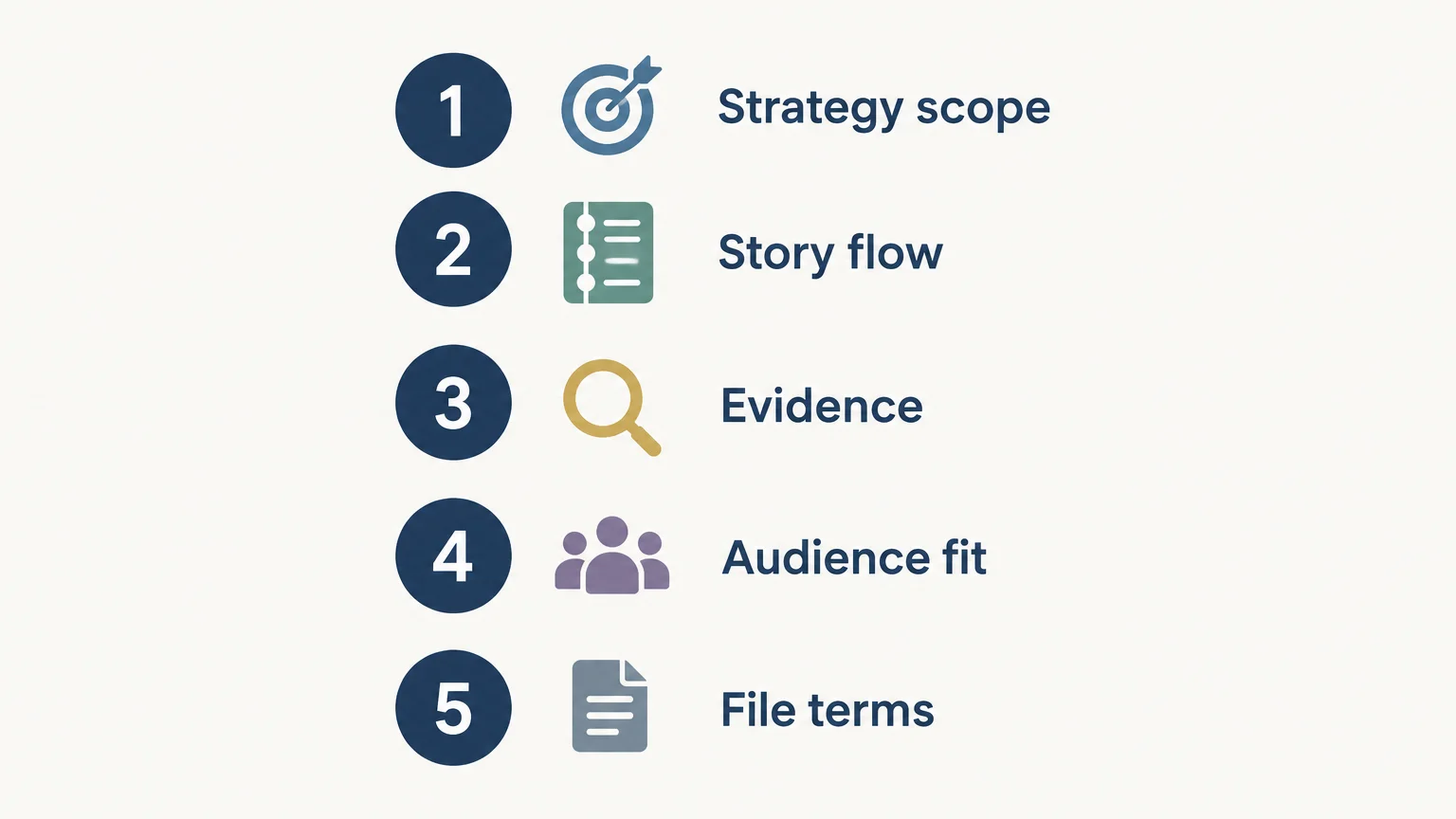
Before committing to a format, compare templates against the work you need to present, not just the visual style. Check whether the structure supports your strategic scope, whether the story progresses clearly, and whether the design makes evidence and decisions readable. A template that looks polished but has no room for your analysis creates extra work and can weaken the argument.
- Strategic coverage: Can you explain positioning, audience, differentiation, and brand identity?
- Story flow: Do the sections build toward a clear recommendation?
- Evidence: Can you show the basis for your conclusions and distinguish facts from interpretation?
- Audience fit: Is the level of detail right for an executive meeting, client discussion, or internal workshop?
- File terms: Are the format, editing options, and licensing terms suitable for your workflow?
Confirm the platform and terms on the actual template page before you select it. Deckadence’s consulting presentation templates are built for presentation workflows that need structured storytelling and decision-focused communication. Our materials are built for PowerPoint, Keynote, Figma, and more, though you should check the specific asset details for its format and terms.
The 2026 CMO Survey lists product and brand strategy among capability topics cited by 12.5% of surveyed marketers, as shown in its 2026 report. A brand strategy deck should therefore clarify both the strategic choice and what teams need to carry it through. Where ownership, resources, or open questions could affect execution, make them visible rather than ending with abstract brand language.
Choose a template that turns strategy into a clear choice
A useful brand strategy presentation connects positioning, audience insight, evidence, and brand expression in a narrative that leads to a decision. Assess the slide sequence, readability, audience fit, and practical file terms against the work you need to present. Then adapt the structure to your evidence and the choice your stakeholders must make.
Bring strategic thinking into your presentations
When your brand strategy contains several connected choices, a clear structure helps people understand the reasoning and respond to the recommendation. Choose presentation materials that support the analysis as well as the visual story.
Our library brings together strategic-thinking templates, board-ready frameworks, narrative structures, and slide systems. The materials pair strategic frameworks with evidence-driven storytelling, action titles, concise messaging, and refined visuals, and are built for PowerPoint, Keynote, Figma, and more. Explore our visual strategic-thinking library to find materials for communicating complex ideas and supporting decisions.
Frequently Asked Questions
What should a brand strategy presentation include?
Include the strategic context, priority audience, competitive perspective, positioning, supporting evidence, and implications for brand expression. The exact sections depend on the decision and audience.
How many slides should a brand strategy deck have?
Use enough slides to explain the decision and its evidence without repeating the same point. Move supporting detail to an appendix when it is not needed to follow the main argument.
What is the difference between a brand strategy deck and a brand guidelines deck?
A brand strategy deck explains the choices behind a brand’s position and direction. Brand guidelines focus on how teams apply the identity consistently across communications and touchpoints.
How can I make a brand strategy presentation more persuasive?
Lead with a clear recommendation, support it with relevant evidence, and explain the implications. Use takeaway titles and a logical sequence so the audience can see how the evidence leads to the choice.
Can strategy frameworks help structure a brand presentation?
Yes, frameworks can organize analysis, but select them to answer the strategic question rather than to fill slides. Our strategy guide covers more than 15 frameworks and includes a framework selection guide.