Board Presentation Templates for Startups: What to Choose
A board presentation should do more than make a startup look polished. It should help directors understand performance, surface risks, and decide where management needs guidance. Selecting board presentation templates for startups therefore starts with the meeting’s purpose, not a trendy slide style. For strategy choices and priorities, our strategic planning presentation template offers a relevant starting point for that part of the discussion, rather than a substitute for operating reports.
The distinction matters because board meetings, investor updates, and fundraising pitches serve different purposes. A board deck needs enough context for oversight and discussion, not just a persuasive company story. The right starting template should give you room for financial performance, operating metrics, risks, and decisions, while remaining easy to update as your business changes.
How do board decks differ from pitch decks?

A pitch deck is built to explain an opportunity and persuade an audience, often during a fundraising or sales conversation. A board deck supports recurring oversight: it reports what changed, explains why it matters, and identifies where directors’ input or approval is needed.
That difference changes the slide sequence. A fundraising story might lead with the market opportunity and product. A board presentation usually gives more space to financial health, operating performance, risks, key initiatives, and decisions requiring discussion.
Investor updates are related, but they are not automatically board decks. An update can summarize progress for investors who are not attending a meeting. Board materials need to support the specific governance discussion, including areas where management needs advice, scrutiny, or a decision.
What should a startup board presentation include?
For example, if directors need to assess a difficult quarter, open with the company’s position and the decisions ahead. Then organize the supporting detail so that a reader can trace the relationship between results, causes, risks, and proposed actions.
A practical board meeting agenda might include:
- Company snapshot: the reporting period, key changes, and overall status.
- Financial performance: revenue, expenses, cash position, and relevant forecast changes.
- Operating metrics: a small set of measures connected to current priorities.
- Milestones and risks: progress against commitments, obstacles, and their implications.
- Board decisions: the question, recommendation, context, and decision needed.
A seed-stage board-deck resource from NextView’s board deck resource groups recurring updates around progress, financials, team, priorities, and concerns. Treat that as a starting structure, then adjust the order to match your company’s priorities and the decisions on the agenda.
How can you assess a template before adapting it?
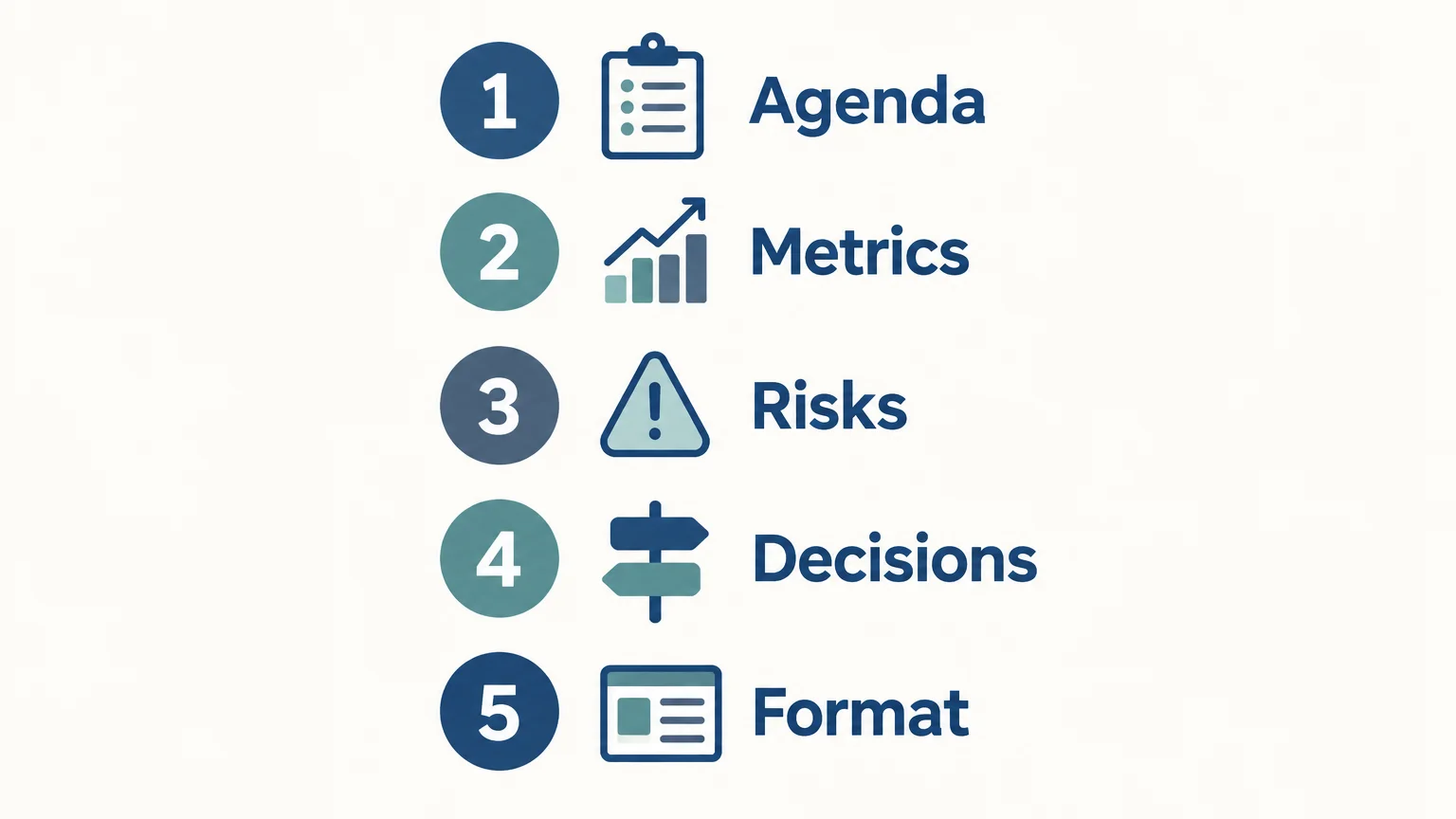
Before choosing a layout, check whether it supports the actual work of your board meeting. A polished design is useful only if directors can quickly find the evidence and questions that matter.
- Agenda fit: Does the slide order reflect your meeting, or force a generic company overview?
- Metric clarity: Can you show the measure, reporting period, comparison, and explanation together?
- Risk coverage: Is there space for setbacks and uncertainty, not only achievements?
- Decision focus: Can you state the question and recommendation clearly?
- Format support: Can your team use the file in its presentation workflow and share it reliably?
A template that looks complete but has no room for risks or decisions can turn the meeting into a one-way status report. For stronger evidence-led storytelling, our evidence-based presentation templates support clear links between claims and supporting information. Apply that approach to your board materials by giving important metrics context, rather than presenting numbers without interpretation.
Which metrics and visuals make the discussion clearer?
Suppose revenue is below plan. A useful slide shows the actual result, the comparison, the main driver, the expected effect on cash or milestones, and management’s response. That gives directors a connected account instead of a chart that leaves them to infer the issue.
Choose startup board metrics according to the decisions they inform. A company may track revenue, customer retention, sales pipeline, product adoption, hiring, or cash runway, but the relevant set depends on its business model and priorities. Define each metric consistently, show the period, and explain material changes.
Use a chart when it reveals a pattern, comparison, or change over time. Use a concise table when directors need exact figures. Keep labels readable, distinguish actuals from forecasts, and avoid presenting a projection as a result already achieved.
Action titles can make each slide’s point easier to scan. Instead of a heading such as “Revenue,” use a short, accurate statement of the result and its implication. Keep caveats beside the claim they qualify, especially when assumptions affect a forecast or interpretation.
How should you share and maintain the board deck?
A board pack is easier to discuss when everyone has the same context before the meeting. The board preparation guidance from Evolution Equity recommends sharing materials in advance so meeting time can focus on topics that need attention and decisions. Set a clear cutoff for updates, and identify any late changes rather than allowing figures to shift without explanation.
Keep a reusable master structure, but revise it when priorities change. Archive each meeting’s version and retain reporting definitions, periods, and assumptions so that directors can compare results consistently. A stable layout also makes unusual changes easier to spot.
Use the agenda to separate information from discussion. Routine updates can be concise, while complex issues need enough context for questions and deliberation. Mark decision items explicitly, and state whether you are asking for approval, advice, or simply a discussion.
When do general startup templates make sense?
General startup collections can be useful when their contents match your presentation’s purpose. Pitch’s startup collection includes pitch decks, investor updates, and status reports. Canva and Slidesgo provide pitch or startup presentation designs, while SlideModel’s startup materials include fundraising, traction, and KPI layouts. These are adjacent formats, so check that any template you adapt also supports board agenda items, risks, and decisions.
Our portfolio focuses on strategic thinking, structured storytelling, and board-ready frameworks and slide systems. Our materials are built for PowerPoint, Keynote, Figma, and more. They can inform the strategy and priorities sections of a board presentation; your financial and operating reports still need to reflect your company’s actual data. When the purpose is a funding or commercial proposal, our pitch proposal template is designed for that distinct presentation need.
Do not select a template solely because it has many slides or visually appealing charts. Start with the meeting’s decisions, then assess whether the format makes evidence, uncertainty, and management’s proposed response easy to understand.
Choose a template around the board’s decisions
The most useful startup board presentation template gives directors a clear view of performance, financial position, risks, milestones, and decisions. Choose a structure that suits your meeting, test it against your reporting needs, and adapt adjacent pitch or investor-update layouts only where their content fits. A consistent, decision-focused deck helps your team communicate progress without hiding the questions that need attention.
Explore Strategic Presentation Assets for Board Work
Board materials need to make complex information understandable and keep discussion focused on the choices ahead. We create strategic-thinking assets that combine frameworks, narrative structures, and presentation-ready slide systems for people communicating important business decisions.

Our library includes board-ready frameworks and materials for strategic analysis, planning, and executive communication, built for PowerPoint, Keynote, Figma, and more. Explore our board-ready presentation assets to find structures that can support the strategic parts of your board narrative.
Frequently Asked Questions
What belongs in a startup board presentation?
Include company performance, financial position, key operating metrics, progress against milestones, material risks, and decisions requiring board input. Prioritize the information that helps directors understand the situation and respond usefully.
How is a board deck different from an investor update?
An investor update shares progress with investors, while a board deck supports a specific governance meeting. Board materials should make room for oversight, discussion, and decisions, not only general progress reporting.
Can you adapt a pitch deck template for a board meeting?
Yes, if you replace fundraising content that does not serve the meeting and add financial reporting, risks, milestones, and board decisions. Keep the parts that explain strategy, product, or market context when they support the agenda.
Which presentation format should a startup choose?
Choose a format your team can maintain and share reliably in its existing workflow. Our strategic-thinking templates and frameworks are built for PowerPoint, Keynote, Figma, and more, while your reporting slides should preserve the underlying data and definitions.
How often should a board presentation template be updated?
Review it when the company’s priorities, reporting needs, or board agenda change. Keep a stable core for comparison, then adjust sections that no longer support useful oversight or discussion.