A low sticker price is not always the lower-cost choice if your team must rebuild the story, check usage rights, or reformat every deck. For client-facing strategy work, compare the best consulting presentation templates against the job they need to do, not the slide count alone.
The phrase cost of premium presentation templates can refer to very different purchases: a single set of layouts, a reusable slide system, or materials with strategic frameworks and narrative structures. The right comparison starts with what the price includes, what uses the license permits, and how much work remains before the deck is ready to present.
What determines the price of a premium template?
A template price is meaningful only when you know what it covers. One offer might be a single presentation file; another might bundle several decks or provide access to a larger library. A custom design service is a different purchase again, with its own scope and fees.
Check whether the listed price is one-time or recurring, and whether it covers one user or a team. Then note exactly what is included: slide layouts, diagrams, icons, fonts, example content, or future updates. Do not assume that a preview image shows every asset in the delivered file.
When comparing a bundle with a single deck, count only layouts you could realistically use. A large library is not automatically better value if most slides do not fit your audience or subject. A smaller, well-structured system may be more useful when it gives your team layouts for the specific presentations it makes repeatedly.
For an accurate comparison, list the offer, price structure, included materials, license, supported platforms, and any additional charges side by side. This gives you a basis for evaluating the full purchase rather than an attention-grabbing starting price.
Which template features justify a higher price?

Consider a consultant preparing a board presentation with a tight deadline. A set of attractive layouts may save formatting time, but a system with clear narrative structures, evidence-driven storytelling, and action titles also supports the work of making complex thinking easier to follow.
Those elements are useful when the slides need to do more than display information. Strong strategic frameworks can help organize analysis; a considered story can help stakeholders understand a choice. The value depends on whether those materials suit your actual work, not on how many features a product description lists.
Our materials combine strategic frameworks, structured storytelling, concise messaging, and board-level visual design. To assess how those elements support client work, review our explanation of the value of consulting templates.
The breadth of presentation work also matters. In its 2025 report, the Presentation Guild survey gathered voluntary, self-reported responses from more than 300 presentation professionals across 36 countries. The report discusses skills beyond slide design, including training, coaching, and data visualization. That context helps explain why comparisons should distinguish visual layouts from tools intended to structure strategic communication.
Which license and platform details change your total cost?
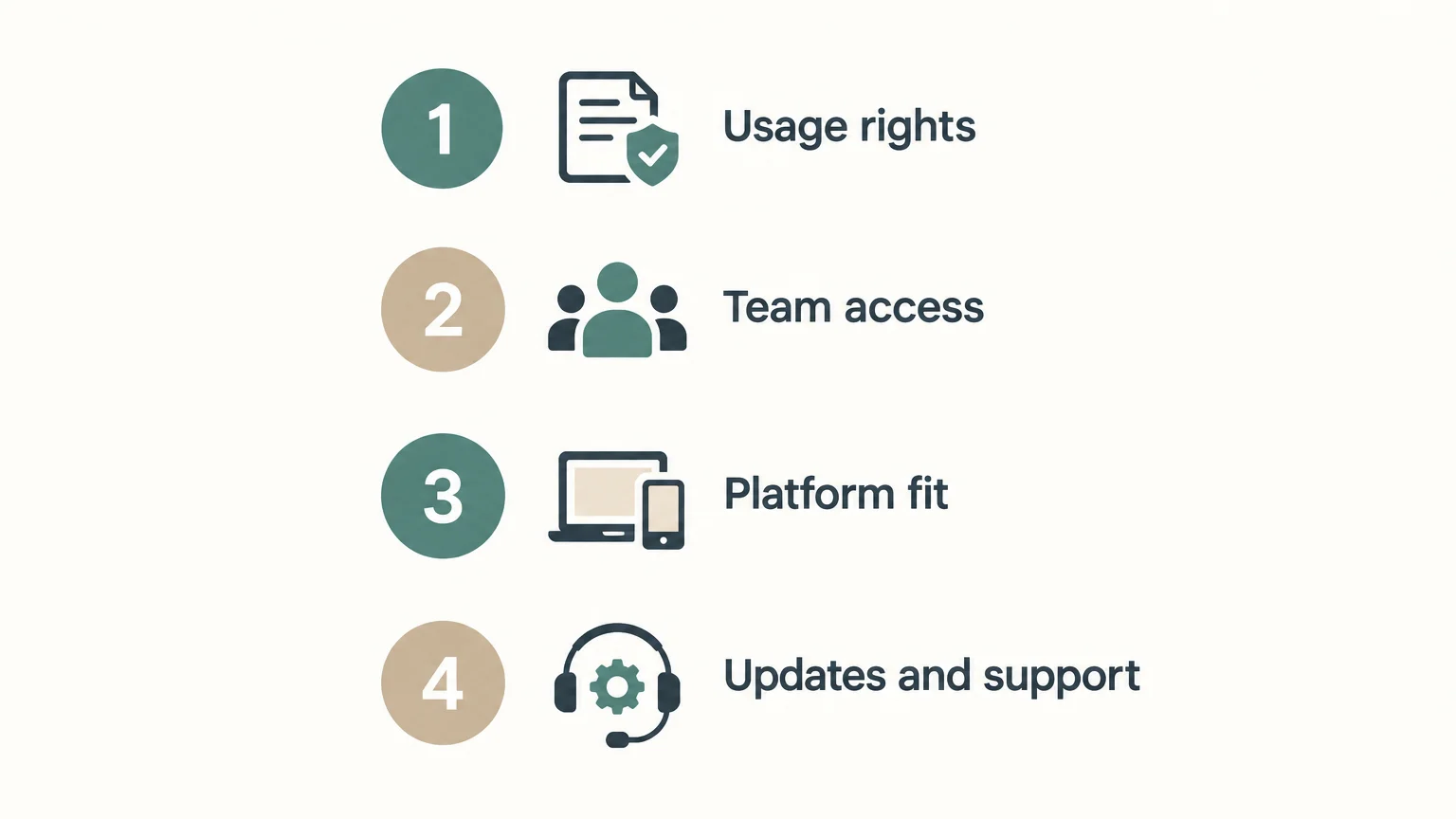
Before buying, read the license for the work you plan to do. Check whether it allows commercial presentations, client work, or use by multiple team members. Look for rules on sharing source files, redistributing layouts, attribution, and continued access. These terms can change how useful a low-priced offer is for a professional team.
Confirm that the files work with your actual presentation tools and that you can edit the parts you need. A seller may support one platform, several platforms, or provide different file types for different products. Verify the exact product details rather than assuming every layout is editable everywhere.
Our materials are built for PowerPoint, Keynote, Figma, and more, but that does not establish that every asset works in every platform. Check the relevant product specifications for the format you need. Also review any stated terms for updates, refunds, delivery, and support before you commit.
Keep a short checklist beside each candidate: permitted uses, number of users, included files, compatible platforms, update terms, and support. If an important detail is unclear, ask the seller before purchase instead of treating silence as permission or inclusion.
How should you compare a template with custom design?
A ready-made template and a commissioned deck solve different problems. A template gives you a starting structure to adapt. Custom design may include work on your specific content, data visualizations, or presentation narrative, so its price is not a like-for-like benchmark for a reusable file.
For context, one presentation-design guide updated in October 2026 lists professional slide-design work at about $5 to $150 or more per slide. That is a service estimate, not a price range for buying templates; the scope and provider affect the figure. Use the 2026 design-cost guide only to understand the distinction between purchasing a reusable asset and commissioning design work.
To estimate practical value, consider how many presentations the asset will support and how much adaptation each requires. Add any necessary extras, such as separate fonts or images, and account for the time your team will spend checking permissions and tailoring the layouts. A low upfront cost can still mean more work later; a higher price is worthwhile only when the included materials match your needs.
If your main challenge is structuring a strategy story, compare the quality of the frameworks and narrative system. If your content is already clear and you need visual consistency, focus on editability, layout variety, and platform fit. These criteria make the decision more useful than comparing slide totals alone.
Choose on total value, not slide count
Before you buy, verify the license, supported platforms, included assets, and any ongoing or additional charges. Then judge whether the layouts and story structure fit the presentations you actually produce. The total cost of a premium presentation template includes both its price and the work needed to use it well.
Choose a presentation system built for strategic thinking
If your presentations need to clarify complex choices, align stakeholders, or support executive decisions, visual polish is only one part of the decision. A clear framework and narrative structure can give your team a more useful starting point than layouts alone.
Our library brings together board-ready frameworks, narrative structures, and slide systems for consulting, executive, and leadership presentations. The materials are built for PowerPoint, Keynote, Figma, and more. Explore our visual strategic-thinking assets to see how strategy and design can work together in your presentation process.
Frequently Asked Questions
Is there one standard price for premium presentation templates?
No single price applies to every template purchase. Compare what is included, the license, and any recurring charges before evaluating the amount.
Does a higher price guarantee a better template?
No. A higher price is useful only when the included layouts, structure, and rights fit your work. Review the actual product details rather than relying on the price alone.
What license terms should I check before buying?
Check permitted commercial and client use, team access, attribution, redistribution, and any limits on sharing source files. Confirm any unclear terms with the seller before purchase.
Will one template work in PowerPoint, Keynote, and Figma?
Not necessarily. Check the exact product specifications for the platform and editing functions your team needs.
What makes a strategy-focused template different?
It can combine visual layouts with frameworks, narrative structures, action titles, and concise messaging. Our presentation materials bring these elements together for strategic communication and decision support.