Slide Science versus StrategyU: Which Presentation Course Fits?
If you are choosing between Slide Science versus StrategyU, first decide whether your main goal is to improve slide craft or build a broader consulting toolkit. Slide Science’s named system focuses on slide building and includes templates and reference materials. StrategyU’s course connects problem-solving frameworks with executive communication and slide design. For a separate perspective on strategy-led slide materials, see our Deckadence versus StrategyU comparison; it is a reference point, not a third course in this comparison.
The right course should match the work you need to do after the lessons: structure a business problem, shape a persuasive story, or create clearer slides. Research on presentation design offers useful context, although it does not test either commercial course. A Penn State-hosted study compared slide formats in a technical learning setting, finding better comprehension for slides that paired a clear assertion with visual evidence.
Slide Science versus StrategyU at a glance
| Criterion | Slide Science | StrategyU |
|---|---|---|
| Course scope | The Slide Science System is a slide-building course and toolkit for executive-facing presentations. | Think Like a Strategy Consultant teaches structured problem-solving, consulting frameworks, and presentation skills. |
| Learning format and materials | Video lessons, a slide-building manual, templates, and supporting visual assets. | A self-paced course with lessons, assignments, templates, and a four-week learning path. |
| Presentation skills covered | Slide structure, design, and practical slide-building methods. | Slide design and communication are taught alongside problem structuring and consulting methods. |
| Software orientation | PowerPoint-focused materials and assets. | Includes slide-design learning; the reviewed course information does not specify a single required slide application. |
| Published price and access | The Slide Science System page lists $299 USD and instant access. | The course page lists $797 USD for a self-paced four-week program; the learning platform lists lifetime course access. |
These are distinct products rather than identical courses with different branding. The published pages reviewed on October 5, 2026 list different prices and course materials, and providers can change those terms. Confirm the current offer and any applicable conditions before enrolling.
What changes between slide training and consulting training?
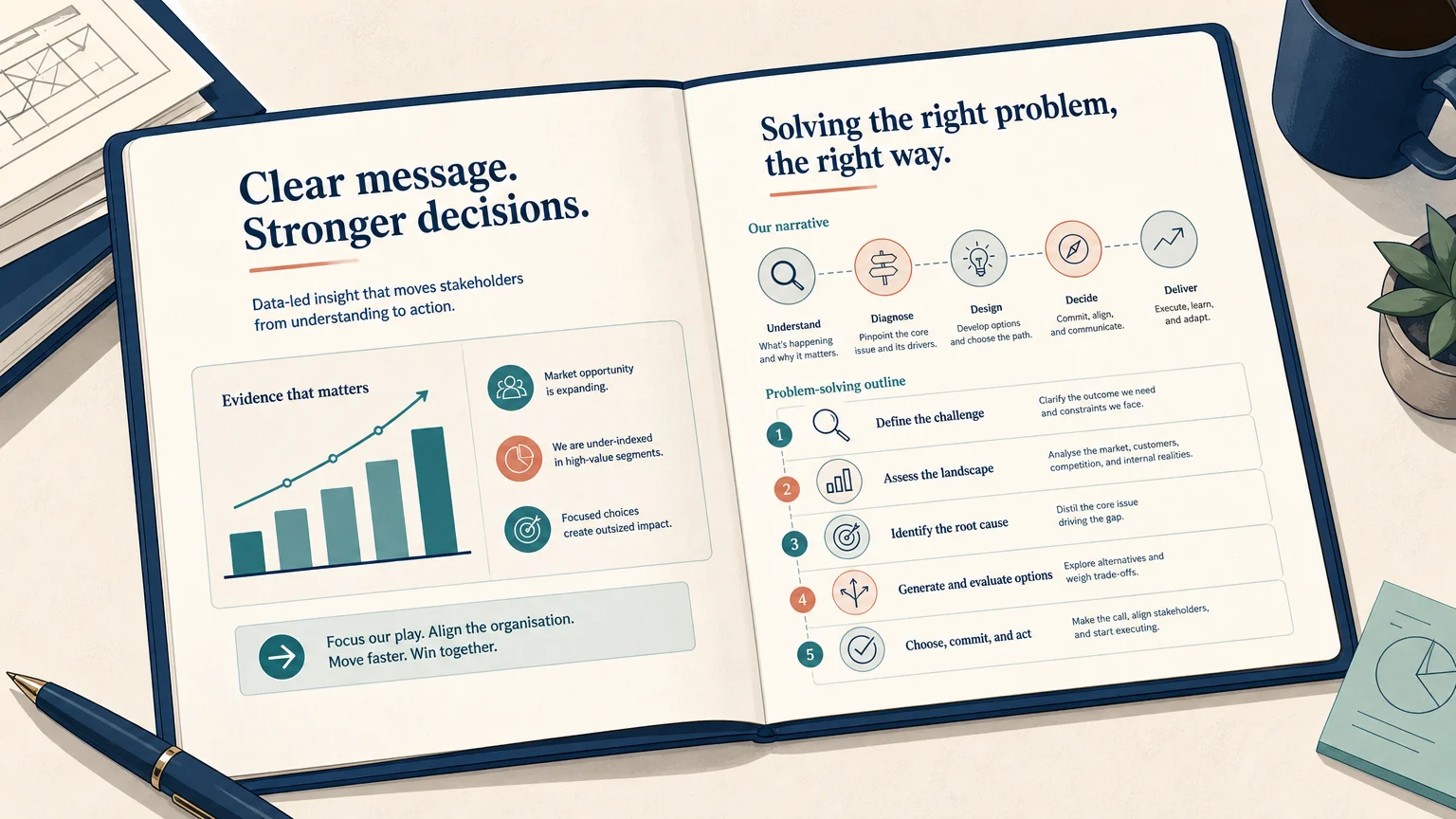
Slide training typically starts with the page: what the audience should notice, how evidence supports the message, and how visual structure guides attention. Strategy training starts earlier, with the problem, its component parts, and the logic that leads to a recommendation. StrategyU’s course brings these strands together, while the Slide Science System concentrates on the presentation-building part of the process.
That difference matters when a deck is only the final step in a larger analysis. If you already know the recommendation but need to make the slides clearer, focused design practice and reusable templates may be more immediately useful. If you need to break down an ambiguous business problem before presenting it, a course that teaches frameworks such as MECE and the Pyramid Principle may be a closer fit.
Presentation quality also depends on how a slide supports the spoken message, not just on its visual polish. Harvard Catalyst’s slide design resources recommend concise assertions supported by relevant visuals. The research context is scientific communication, so treat it as a useful design principle rather than proof that one course produces better results.
Slide Science
Best for: Professionals who want a focused way to improve corporate slide building and use a practical collection of presentation assets.
The Slide Science System combines video training with a slide-building manual, templates, a shape library, and reference sheets. Its emphasis is on creating polished slides for executive audiences. Slide Science also lists a separate Strategy System, so the comparison here concerns the slide-focused system rather than every program from the provider.
Pros:
- The course combines instruction with templates and reference materials, giving learners practical resources to apply while building slides.
- The published page states a price of $299 USD and instant access, making its listed entry price lower than StrategyU’s course.
- The PowerPoint-focused materials suit learners whose immediate need is slide construction and presentation design.
Cons:
- The Slide Science System is more narrowly focused on slide building than StrategyU’s wider consulting curriculum. Its separate Strategy System may be relevant if you also want training in problem-solving.
StrategyU
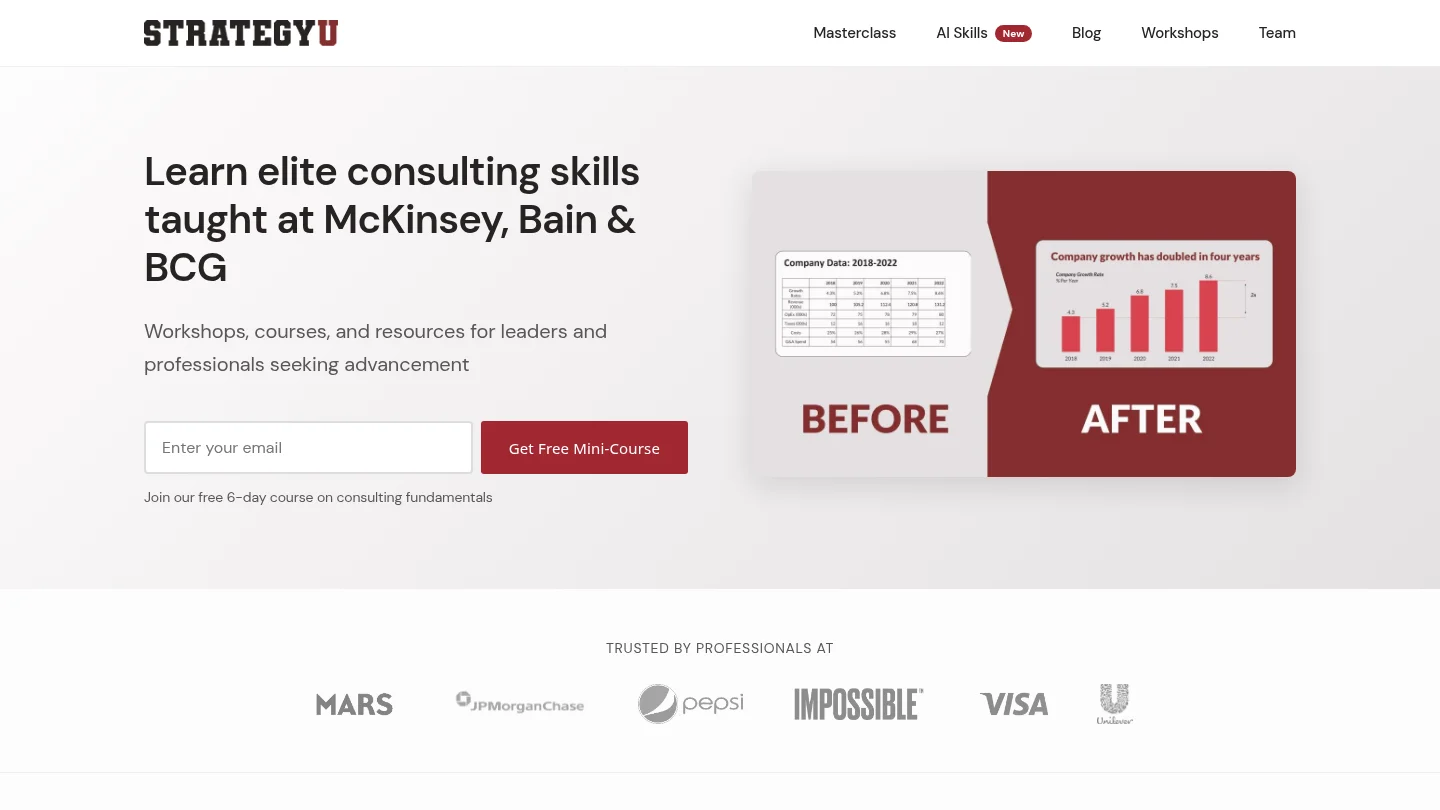
Best for: Professionals who want to learn consulting-style problem structuring and connect it to executive communication and slide design.
Think Like a Strategy Consultant is a self-paced course organized around a four-week path. Its curriculum includes structured problem-solving, MECE thinking, issue trees, the Pyramid Principle, and presentation skills. The course page lists 76 lessons and a price of $797 USD; the learning platform describes lifetime access. These are provider-stated course details, not independent measures of learning outcomes.
Pros:
- It covers consulting frameworks and problem-solving as well as slide design, making it relevant when the work begins before the deck.
- The self-paced format and course materials support learners who want to work through a structured curriculum alongside their other responsibilities.
- The provider lists lifetime access on its learning platform, which can be useful for revisiting course materials.
Cons:
- Its broader curriculum and higher listed price may be more than you need if your main goal is a focused slide-building toolkit.
- The course is training, not the same kind of slide-template and visual-asset bundle offered by the Slide Science System.
Which course fits your goals?
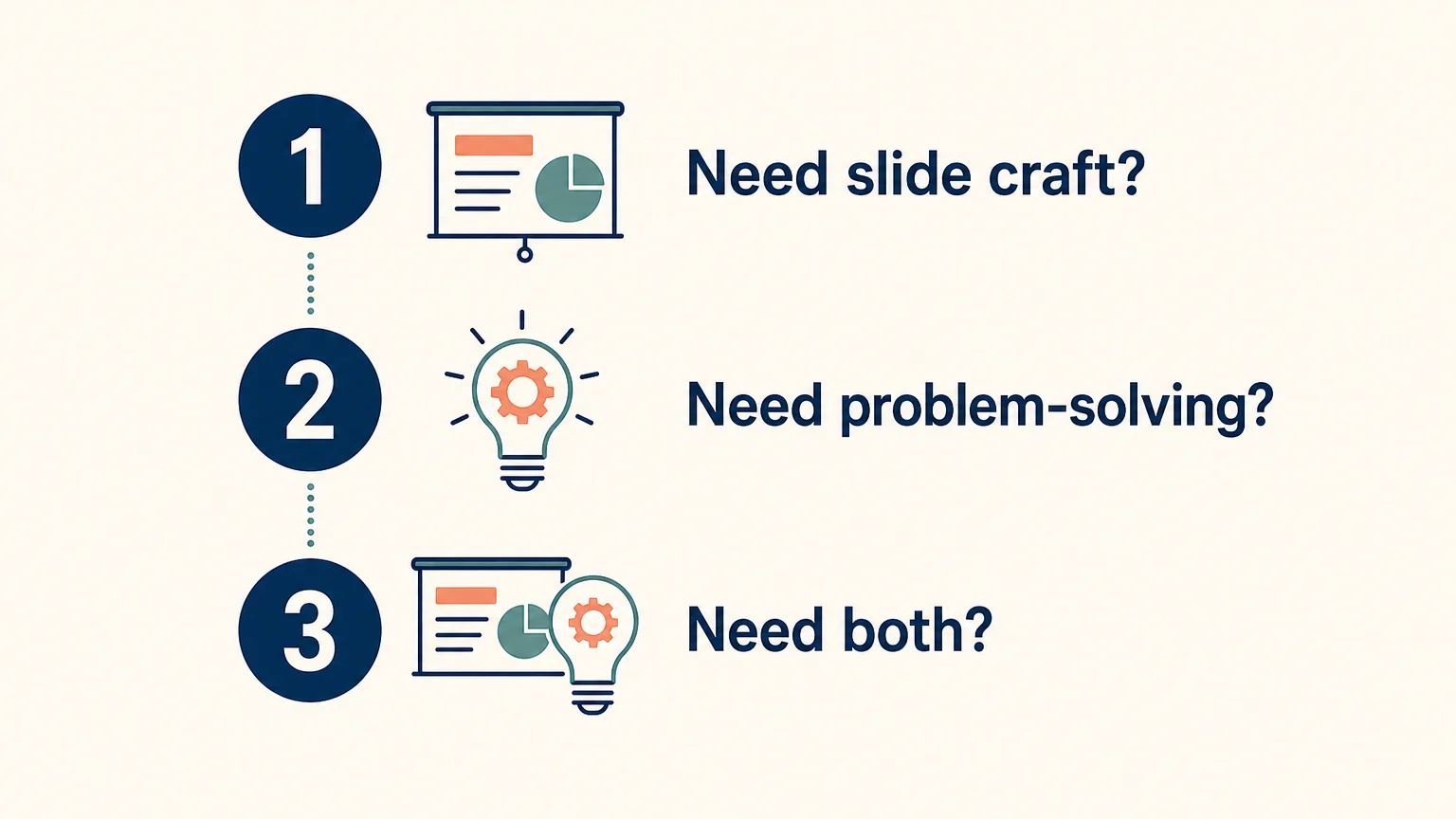
Start with the skill you expect to use most often. Choose Slide Science’s system if you want focused slide-building instruction and accompanying PowerPoint-oriented resources. Choose StrategyU if you want to practice structuring business problems as well as communicating recommendations.
If both needs matter, look closely at the specific course materials rather than relying on a broad provider description. Consider whether the lessons include the frameworks, examples, and practice you need, and whether the software focus suits your workflow. For practical slide principles, the University of California San Diego’s presentation design guidance emphasizes using visuals purposefully and reducing unnecessary on-slide text. To connect slide design with business storytelling, our consulting presentation structure resource offers another reference for organizing a consulting-style deck.
For teams, compare the available format and terms with your group’s needs before deciding. StrategyU lists team workshops and customized programs as separate options, while the Slide Science System is presented as an individual digital course and toolkit. Do not assume that the team terms, prices, or materials are interchangeable with those of the self-paced courses.
Conclusion
Slide Science versus StrategyU is mainly a choice between focused slide-building and broader consulting-skills training. Slide Science is the closer fit when presentation assets and slide craft are your priority. StrategyU is a stronger match when you want problem-solving frameworks alongside presentation skills. Choose by the work you need to improve, then verify the current course contents, price, and access terms.
Make Strategic Thinking Clear on Every Slide
Once you have selected a learning path, the next challenge is turning strategic analysis into a clear story for colleagues, clients, or decision-makers. Your slides should make the logic visible, keep attention on the central message, and help the audience understand what decision follows.
Our library brings together visual strategic-thinking assets, including slide decks, templates, frameworks, narrative structures, and slide systems. We combine strategy frameworks with structured storytelling and board-level visual design. Our materials are built for PowerPoint, Google Slides, Figma, Canva, and more, helping you organize ideas and communicate decisions with clarity. Explore our visual strategic-thinking assets as a resource for your next presentation.
Frequently Asked Questions
Is Slide Science only about slide design?
The Slide Science System is focused on slide building and presentation assets. Slide Science also lists a separate Strategy System, so the provider’s broader catalog extends beyond that specific course.
Does StrategyU teach presentation design?
Yes, presentation and slide design are part of its broader consulting-skills curriculum. The course also covers problem structuring and consulting frameworks.
Which course is better for ready-to-use slide resources?
The Slide Science System explicitly includes templates and other slide-building materials. Review the current contents of each course if you need a particular type of asset.
Which option is a better fit for learning consulting frameworks?
StrategyU’s course explicitly includes frameworks and structured problem-solving. Slide Science’s named slide-building system has a narrower focus, although the provider lists a separate Strategy System.
Should I check the terms before enrolling?
Yes. Prices, access details, course materials, and any applicable conditions can change. Check the relevant provider page for the specific program before you make a decision.